Ansel Easton Adams and Taos Pueblo
Published by the Two Red Roses Foundation, October 31, 2014
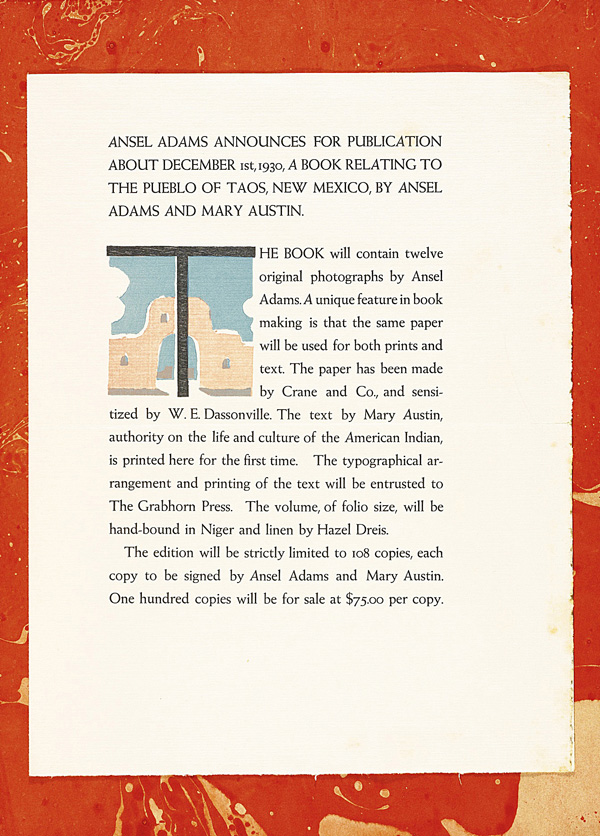
Recently, a book of photographs of legendary rarity quietly came to the market. Recognizing its historical significance and its relevance to the collection, TRRF took advantage of this extraordinary opportunity. The book, Taos Pueblo, legendary photographer Ansel Adams seminal work, produced in collaboration with Taos resident and poet Mary Austin, was purchased in a rousing Sotheby's auction. Containing twelve silver bromide gelatin prints hand produced by Adams, the book is personally signed by both Adams and Austin and is now the most prized vintage photo book in the Two Red Roses Foundation's growing collection.
A true photograph need not be explained, nor can it be contained in words – Ansel Adams
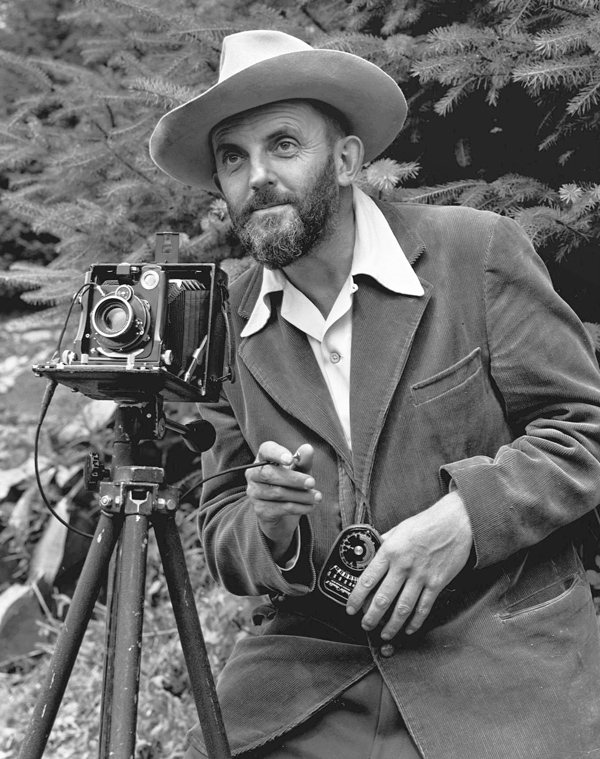
This book, possibly the most famous of modern photographic works on the West was a collaboration between the young photographer, Ansel Adams, and one of the most evocative writers on the Southwest, Mary Austin. An elegant design by the Grabhorn Press provides a counterpoint to Adams' photographs of the adobe Pueblo. The book distilled the romance and naturalism that many Americans found in the Indian pueblos of New Mexico, and defined the style that was to make Adams the most popular of photographers of the American West. "It was at Taos and Santa Fe that Ansel Adams first saw the Southwest. The time was the spring of 1927. His visit resulted in a Grabhorn Press book now of legendary rarity. It includes Ansel Adams' photographs and Mary Austin's essay on Taos Pueblo. Genius has never been more happily wed. Nowhere else did she write prose of such precise and poetical authority. Their Taos Pueblo is a true and beautiful book by two consummate artists", as described by Lawrence Clark Powell's essay in Ansel Adams: Photographs of the Southwest
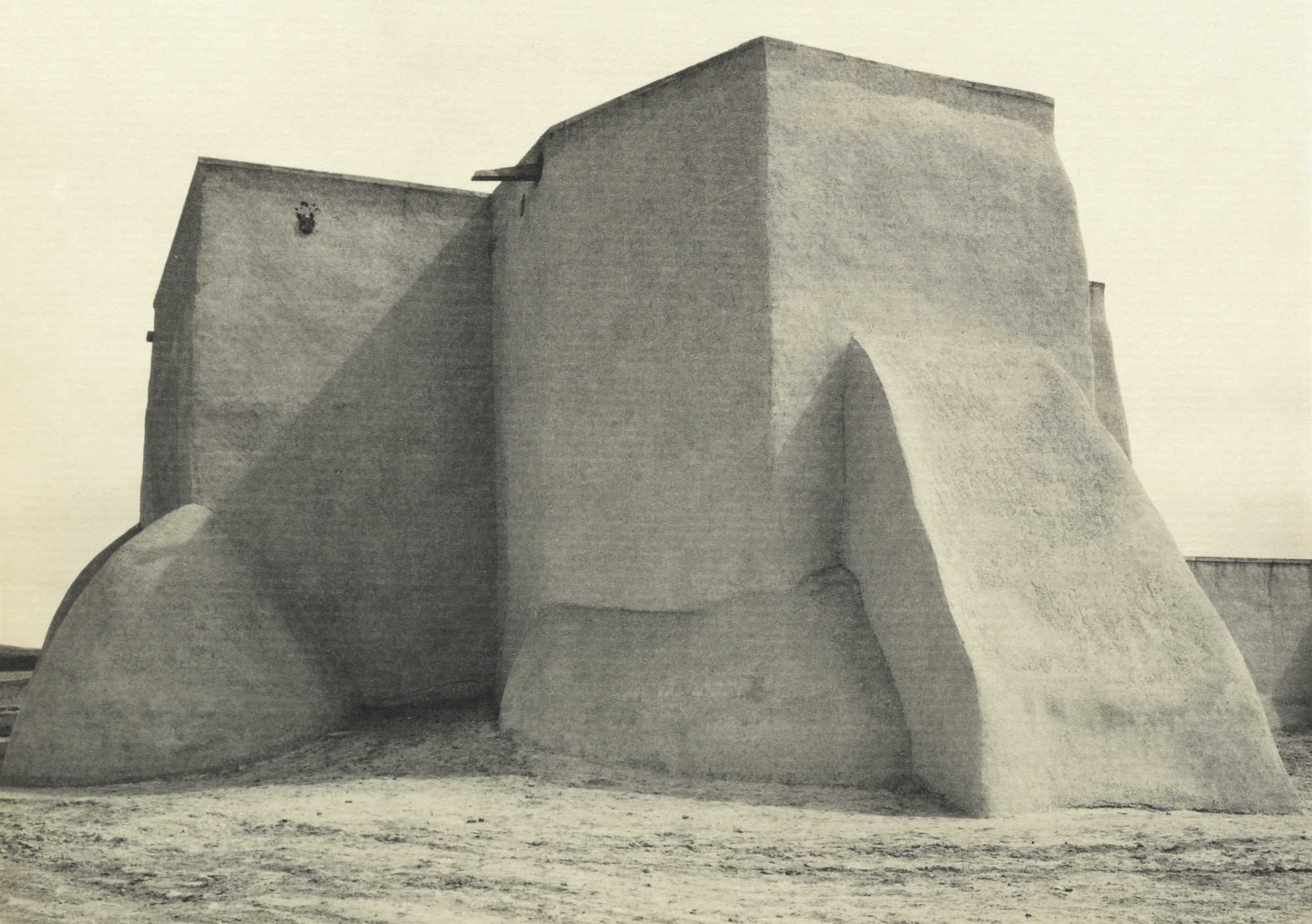
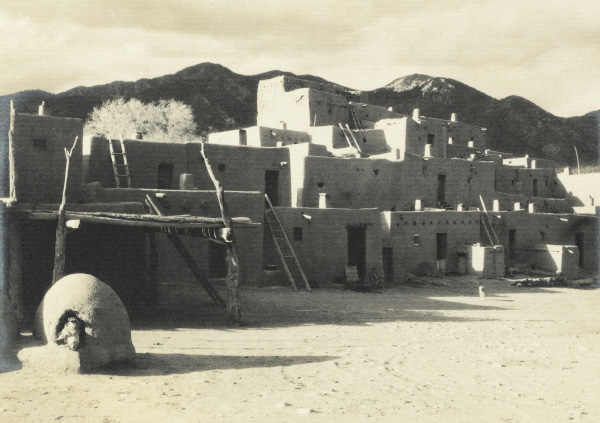
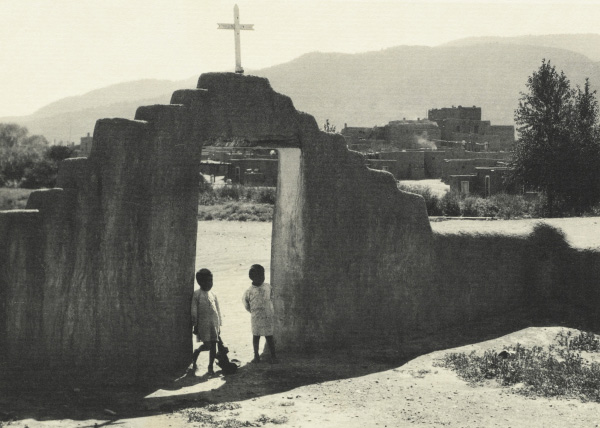
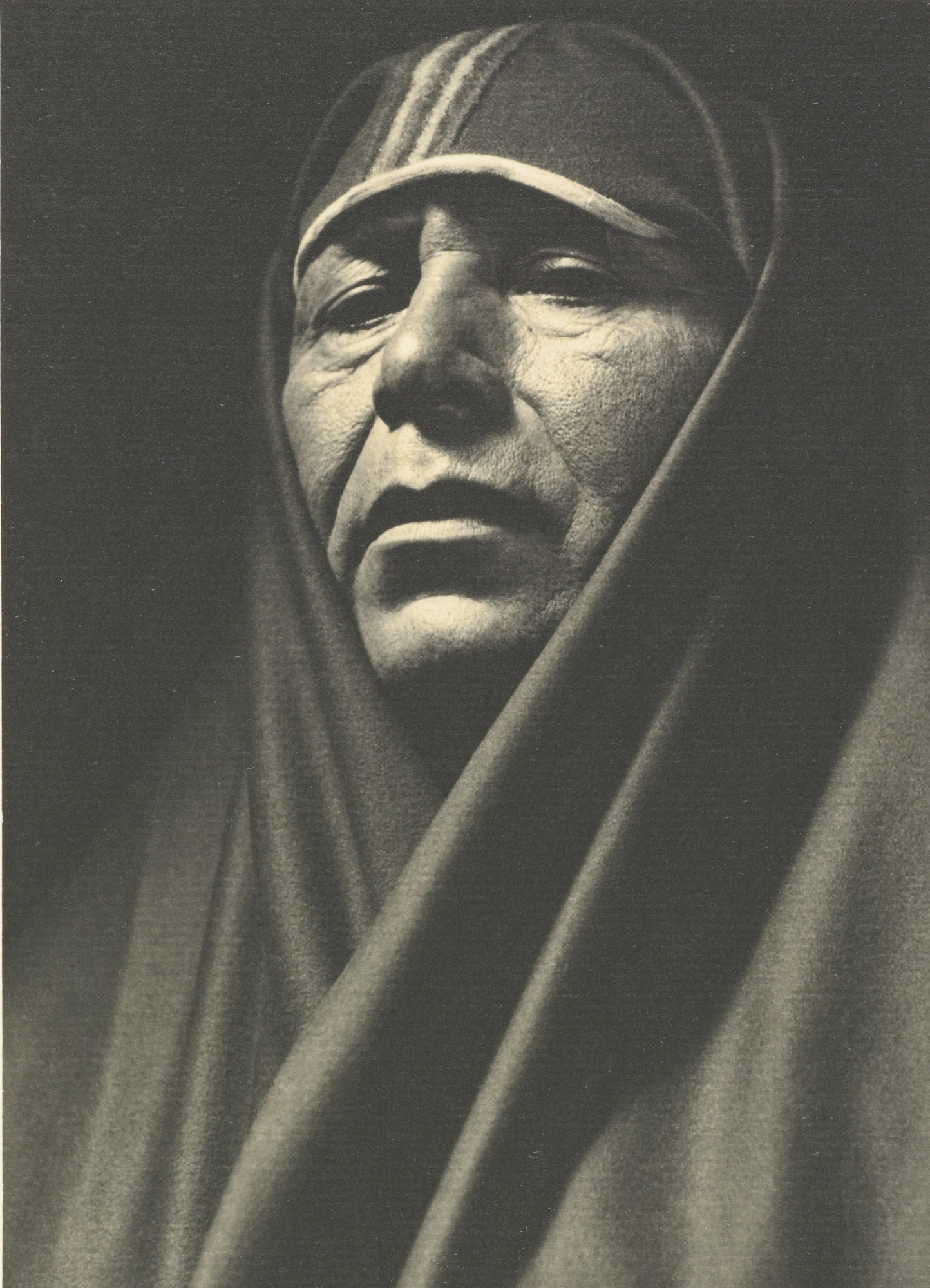
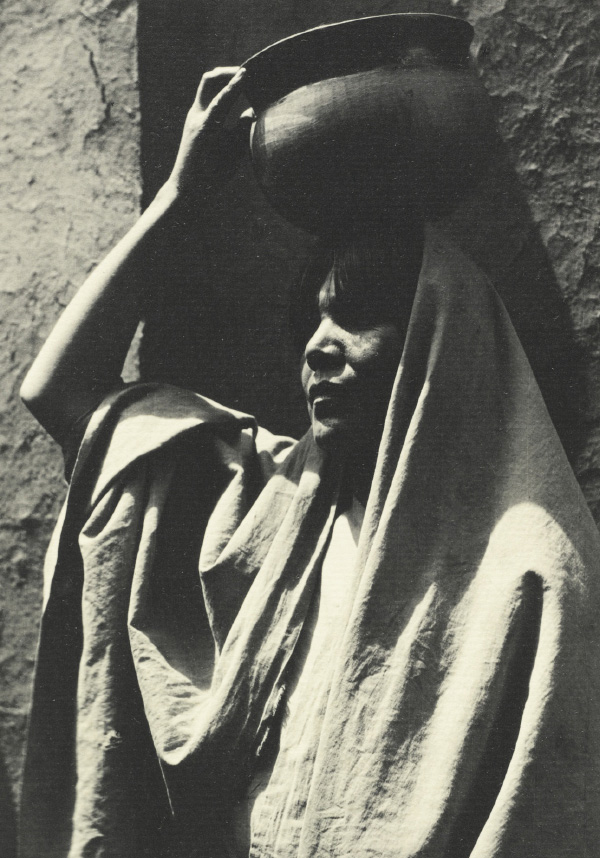
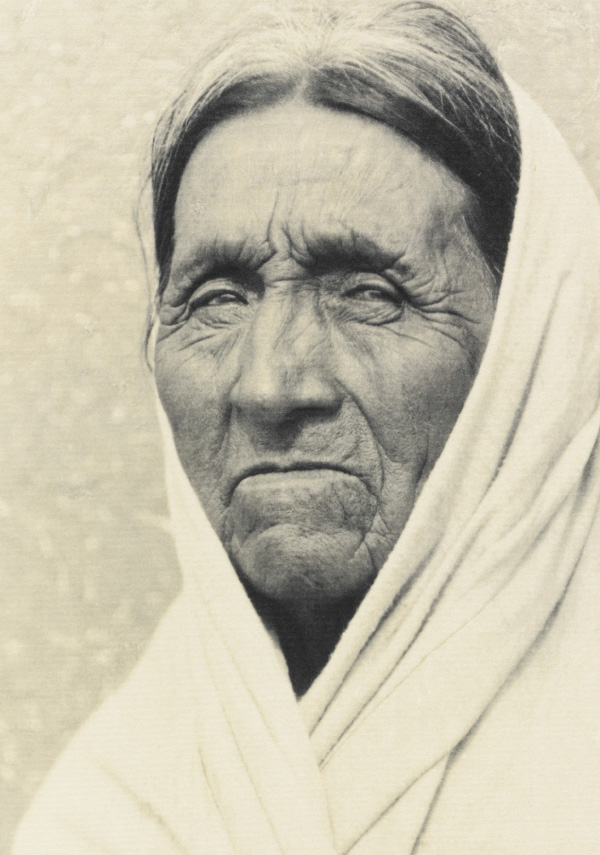
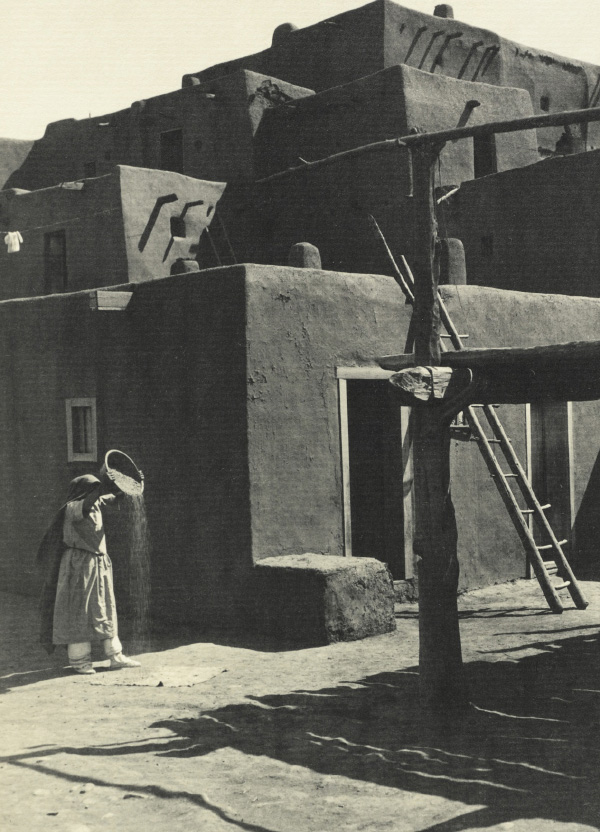
"When Taos Pueblo, his first book, was published in 1930, Ansel Adams was just 28… Adams had only recently put aside a nascent career as a concert pianist to pursue photography full time, but he still wasn't sure he could make a go of it when he took up the Taos project in collaboration with Mary Austin, a popular novelist and nature writer based in Santa Fe… The twelve photos in Taos Pueblo--each an original print on silver bromide paper prepared especially for the book by Adam's San Francisco custom-paper supplier, William Dassonville--include several formal portraits reminiscent of Edward Curtis and nearly circumscribed, almost intimate landscapes that are a far cry from the inflated magnificence associated with Adam's later work… The book's solid success at the height of the Depression (all 108 copies sold over two years at $75 each) encouraged Adams to continue in his course as a photographer of the American landscape."-- The Book of 101 Books: Seminal Photographic Books of the Twentieth Century / Edited by Andrew Roth. New York : PPP Editions in association with Ruth Horowitz, 2001.
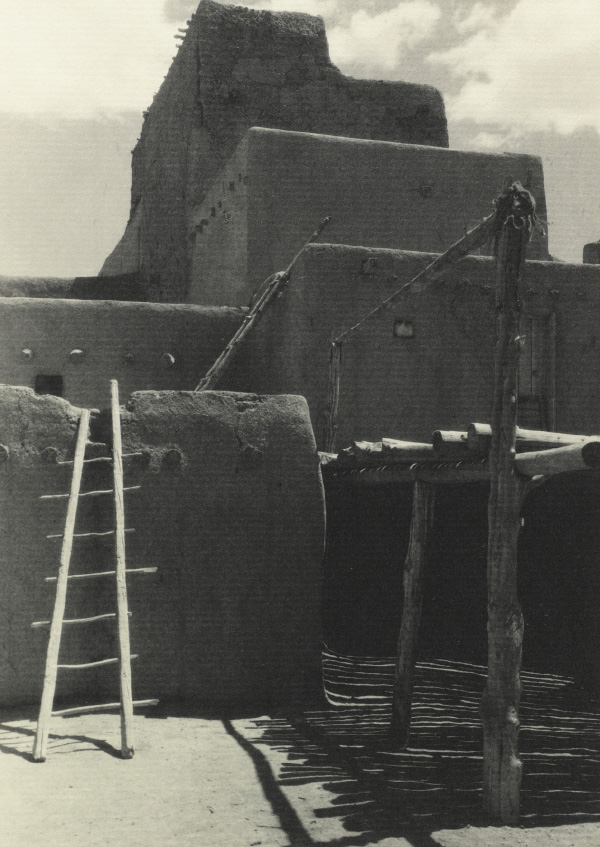
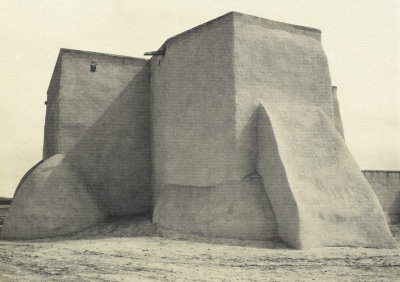
In 1977, the Boston New York Graphic Society produced a reprint of Taos Pueblo in a limited edition of 950 in blind-stamped quarter leather and cloth with sheet-photogravure reproductions of the twelve images. In the Afterword, Weston Naef of the Metropolitan Museum of Art comments "With Taos Pueblo we see a commitment to light and form as the essential building blocks of a picture. Every exposure was made in the most brilliant sunshine which in turn created deep shadows. Sunlight and shadow are at the same time the photographer's friend and foe. Neither films nor papers can record the two extremes of bright sun and deep shadow equally well, and an unhappy tonal compromise is often the result. Rich shadow detail is here realized simultaneously with delicate highlights in a way that proves Adams's native sense for the toughest technical problems of the medium, and how to solve them".
Ansel Adams' Taos Pueblo
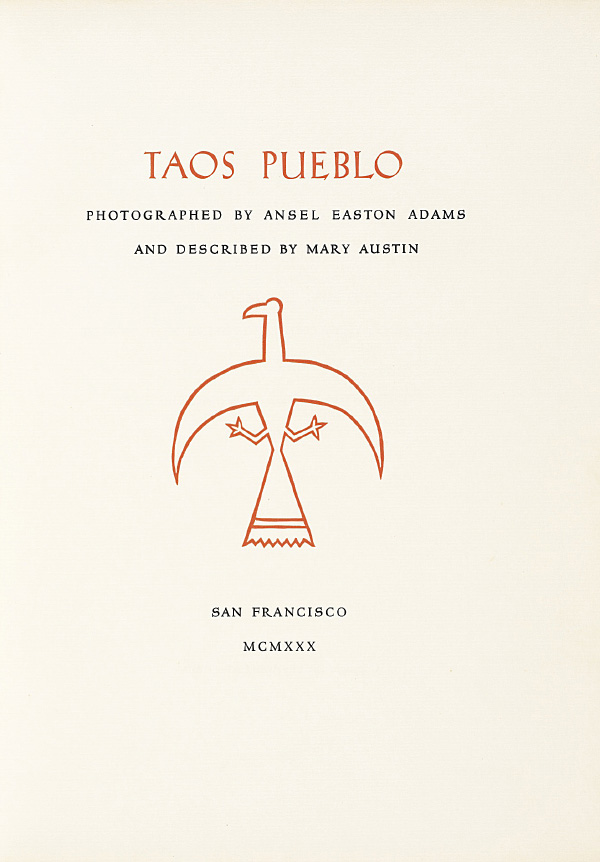
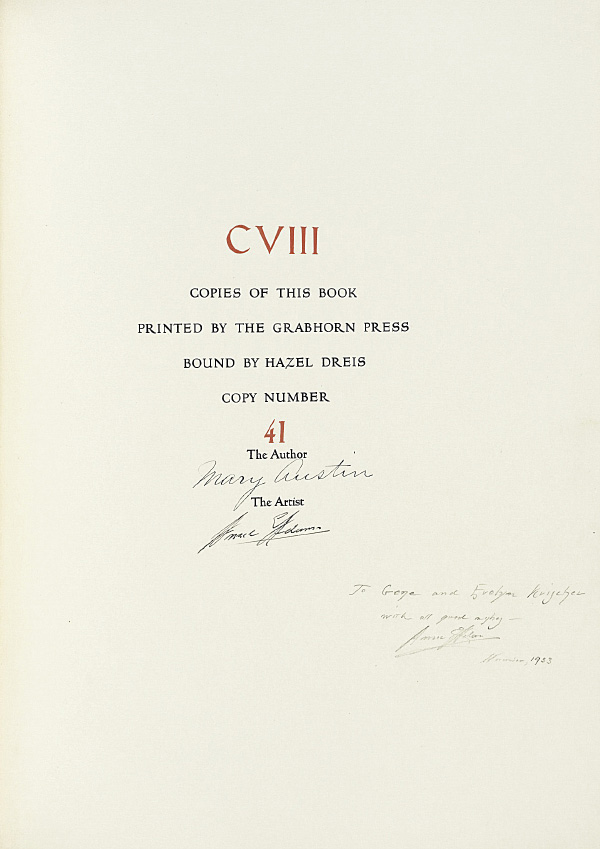
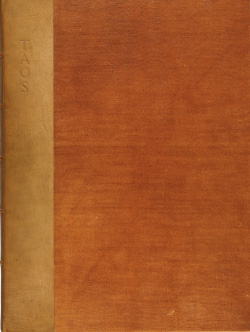 Taos Pueblo, a collaboration between young Ansel Adams and Mary Austin, was produced in 1930 in a small edition of 108 (this copy is editioned 41 of 108). Exceedingly rare, it is considered one of the greatest books produced by the Grabhorn Press. The 17" x 12 ½" folio is hand bound in original quarter tan morocco over orange buckram by Hazel Dreis with six preliminary pages followed by fourteen pages of text. The following twelve original silver bromide prints were hand printed by Adams himself on rag paper specially sensitized with emulsions by William Dassonville, his San Francisco paper supplier (Adams had to produce manually 1296 silver prints for this project!). The manuscript pages were enhanced by a beautifully designed Indian Thunderbird motif by Angelo Valenti, an Italian-American printmaker, illustrator and author. Signed by Mary Austin and Ansel Adams in ink in the colophon and dedicated by Adams to the Krischers.
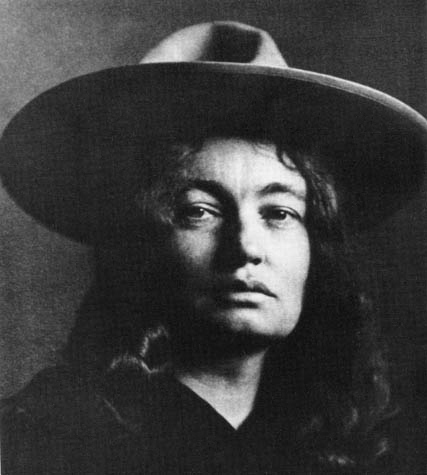
In a letter to a friend Adams wrote "With Mary Austin writing the text… I have a grand task to come up with the pictures." However, Austin wrote her text, which has itself been described as photographic, without seeing the images. Beth Capo, in a paper presented at the annual meeting of the American Studies Association Annual Meeting, in Albuquerque, New Mexico, examines the product of their collaboration through the interdisciplinary lens of American Studies which offers multiple angles on the intersection of not just two careers, but of the American environmental movement and a movement by white women to promote Pueblo arts. Austin wrote several "Ecofeminist" works depicting Native Americans of the Southwest, their folktales, poetry, and rituals, in her fiction and nonfiction.
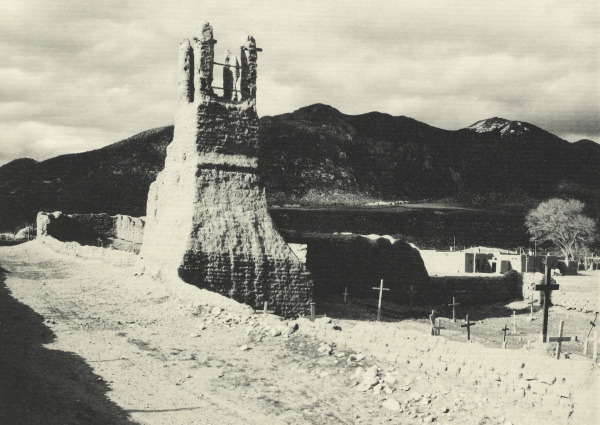
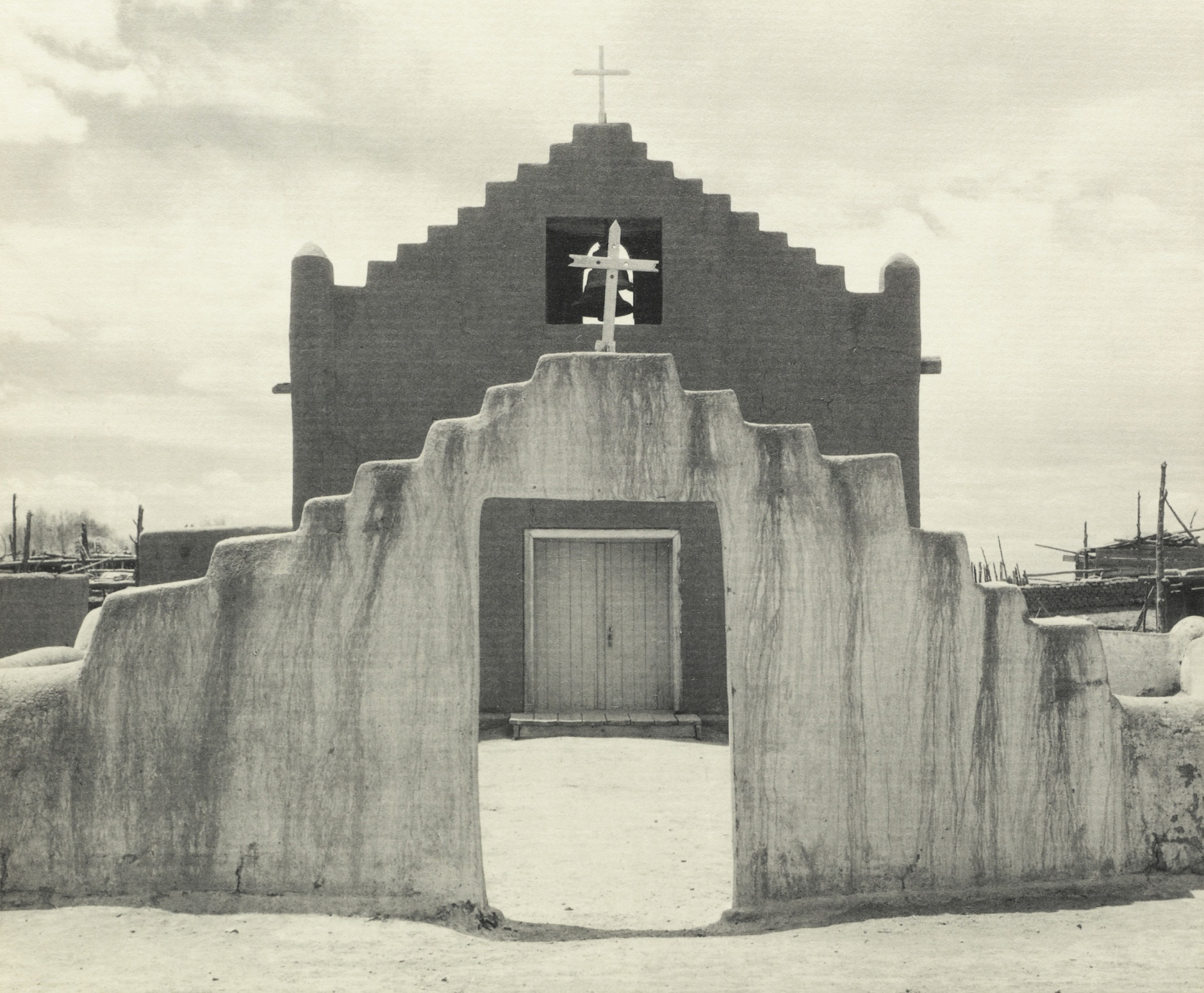
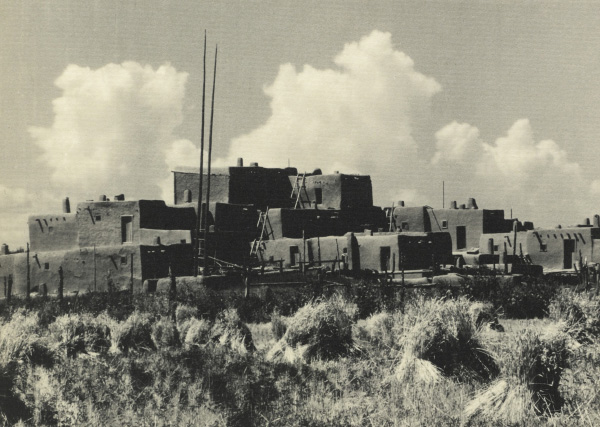
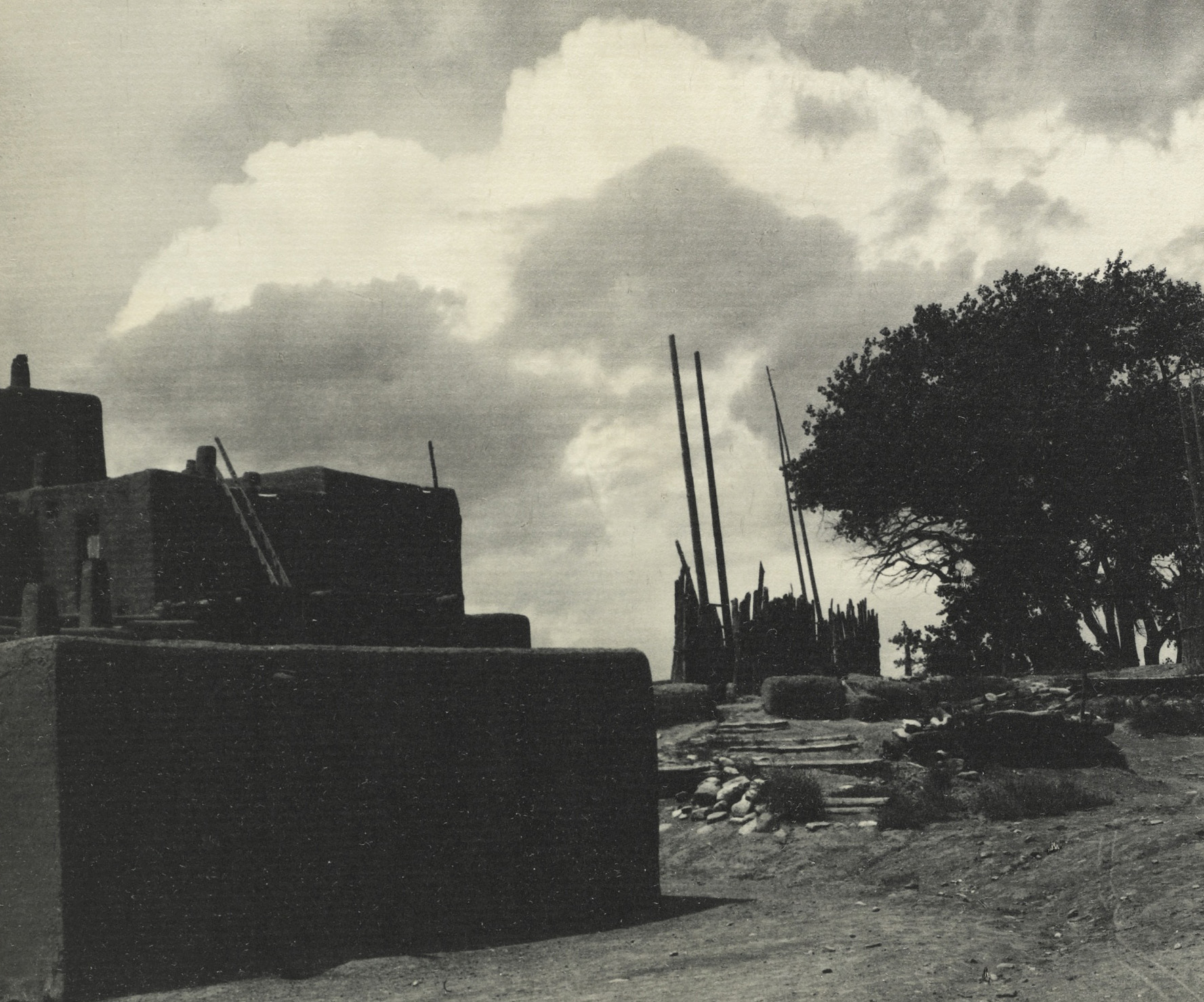
The following images below, including frontispiece, title page and colophon in addition to all twelve Adams' photographs, take you on a pictorial journey through the crude yet elegant pueblos of Taos and of some rugged characters that inhabit them.