Frederick Rhead: An Artistic Appetite for Fish
Published by the Two Red Roses Foundation, November 13, 2015
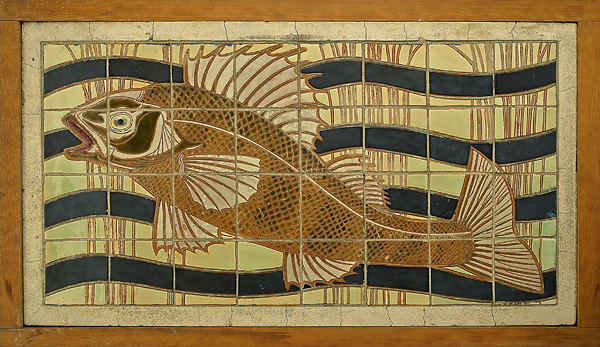
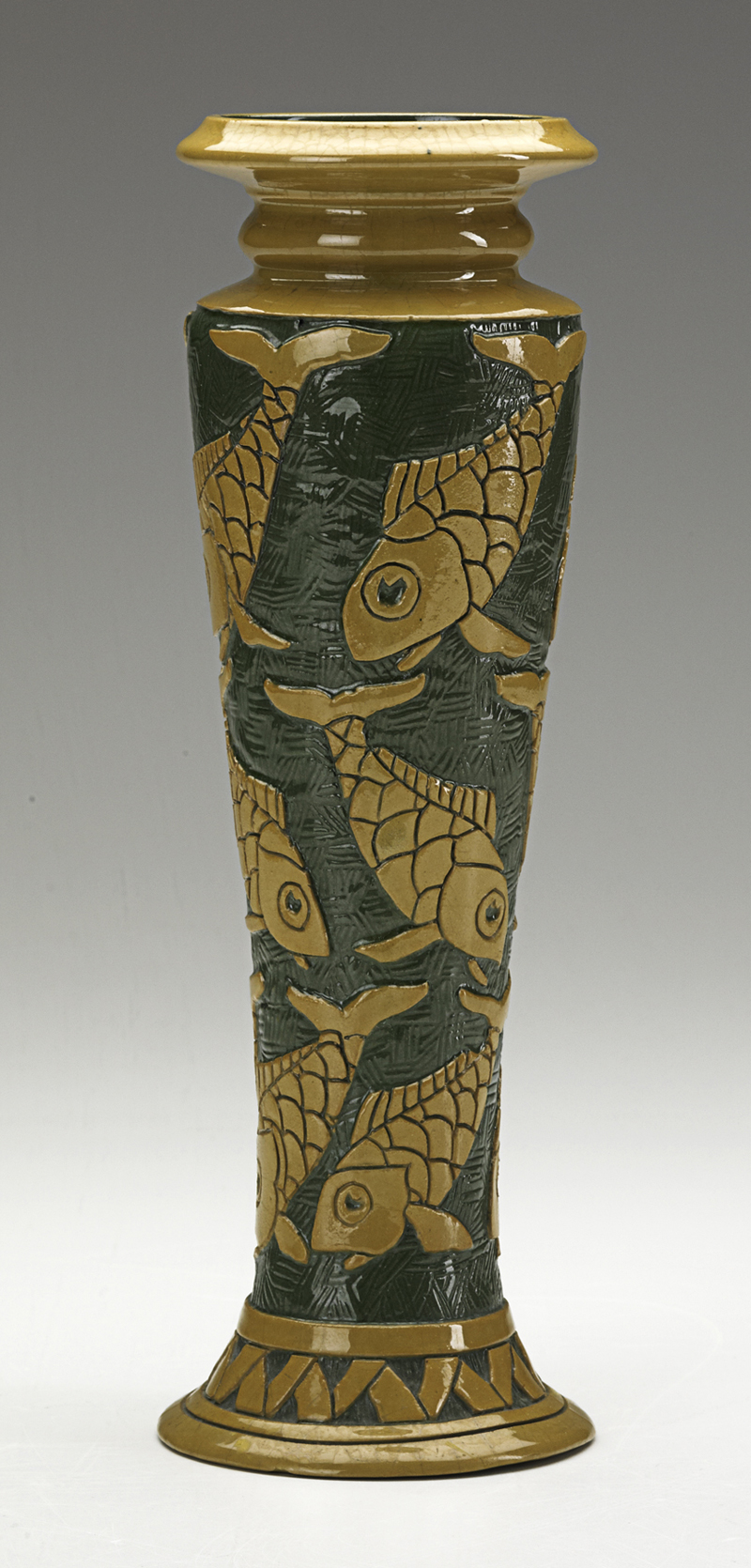
Frederick Rhead’s fish panel may have had its start in the same 1903 Keramic Studio design competition that inspired the peacock series. When juror Hugo Froehlich praised the color harmony of Rhead’s peacock sketch, he added that his fish design lacked this quality. Rhead revisited the fish motif at Weller in 1904 and again two years later as artistic director of Roseville Pottery. His well-known Della Robbia line for Roseville included at least two sgraffito vases covered with fish in relief against a roughly carved ground that was produced in several color schemes
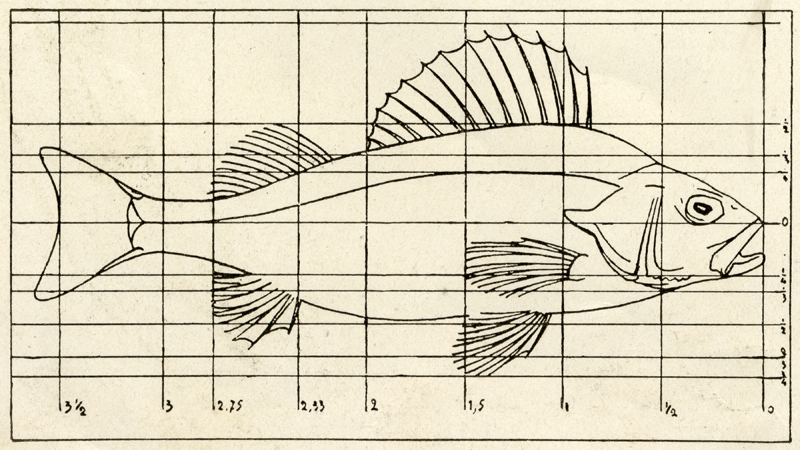
As Sharon Dale has pointed out in her landmark study of Rhead, a direct influence on the fish tile panel now in the collection of the TRRF is the work of prominent French artist and designer M.P. Verneuil (1869–1942). Rhead was probably familiar with Verneuil’s many pattern books, especially his Encyclopédie Artistique et Documentaire de la Plante, a four-volume work with hundreds of color plates published between 1904 and 1908, and his numerous articles written for the French journal Art et Décoration. He was certainly aware of American translations of Verneuil’s article on the use of fish as a motif for ceramics, jewelry, wallpaper, fabrics, and other applied arts. Both The Craftsman Magazine and Keramic Studio published Verneuil’s illustrations in their April 1905 issues, including a perch laid out on a proportional grid to assist the designer. Given Rhead’s ongoing relationship as a designer and author with Keramic Studio, there is little doubt that the magazine was part of his library.
Some eight years later at his own pottery in Santa Barbara, Rhead may have had Verneuil’s drawing in mind when he laid out a fish on a four-by-eight tile grid. Rhead gave his perch a more lively serpentine line and its characteristic vertical striping, but he also stylized its spiny fins, clumps of seaweed, and bold horizontal currents to create a unique, decorative design. Verneuil intended artists to take liberties with nature. Referring specifically to his illustration of the perch’s proportions, he advised the decorator “to give the impression, the effect of a specimen, rather than its exact representation. He is, furthermore, free to change the proportions of the species, in view of the effect desired. He can emphasize the characteristics peculiar to the species, in order to distinguish it from others… The perch appears slightly humpbacked and has fins provided with small spurs, and these characteristics will furnish the germ-idea of the decorative treatment; each designer proceeding according to his fancy and the desired result.”
On this particular tile panel, Rhead may also have been influenced by a source much closer to home. His uncle, Louis Rhead, was an accomplished designer and illustrator. He was also a knowledgeable fisherman and published several advice manuals on fishing. His depictions of perch could have provided all the “germ-idea” Frederick Rhead needed. Many years after Rhead produced the fish tile panel, his second wife, Lois Whitcomb Rhead, told an apocryphal story regarding her husband’s work habits. Reflecting on his tendency to create many variations on a single motif, peacocks and fish included, she claimed that Rhead once “delayed a dinner party because he was using the main course, a fish, as a model and hadn’t quite finished his sketches when the dinner guests arrived.”
-Susan J. Montgomery, PhD