Robj Paris: Where Playful Collecting Meets Art Deco Whimsy
Published by the Two Red Roses Foundation, December 17, 2016
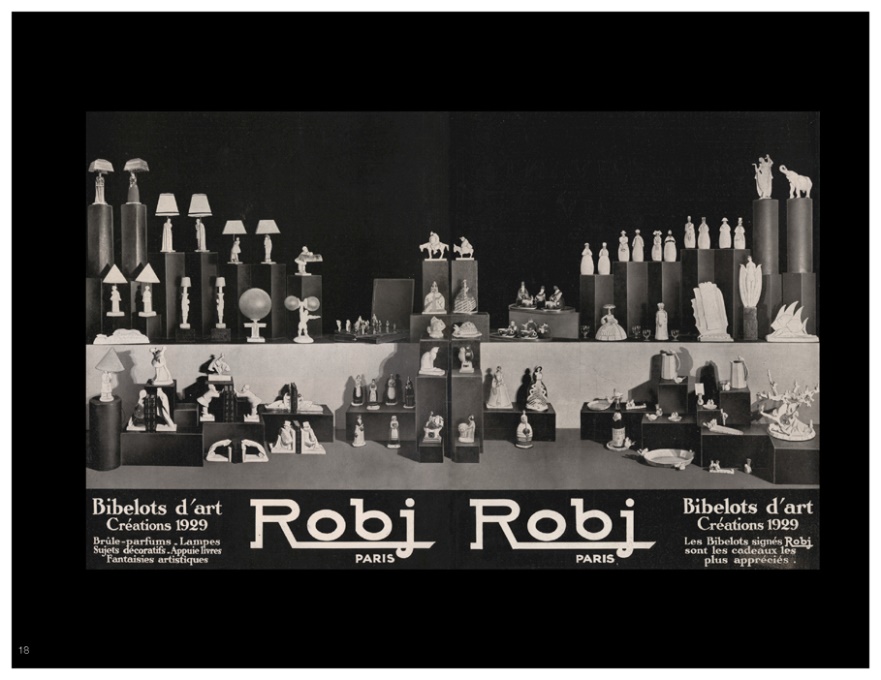
The production of Robj porcelain figurines and other objects reached the height of their popularity in the late 1920s and early 1930s. Jean Born (Robj) and his partner Lucien Willmetz, managed a successful retail store at 3, Cite d’Hauteville in Paris. They actively encouraged Art Deco and Cubist ceramic designers and artists, and provided a showcase for their production works. Robj sponsored an annual competition of “art deco trinkets” between 1927 and 1931 as a means of discovering new designers. Robj was not a manufacturer – his porcelain pieces were commissioned and produced by various suppliers among them Manufacture de Sèvres, Villeroy et Boch in Luxemburg, several factories in Limoges and a decoration workshop with a muffle furnace in Boulogne-sur-Seine.
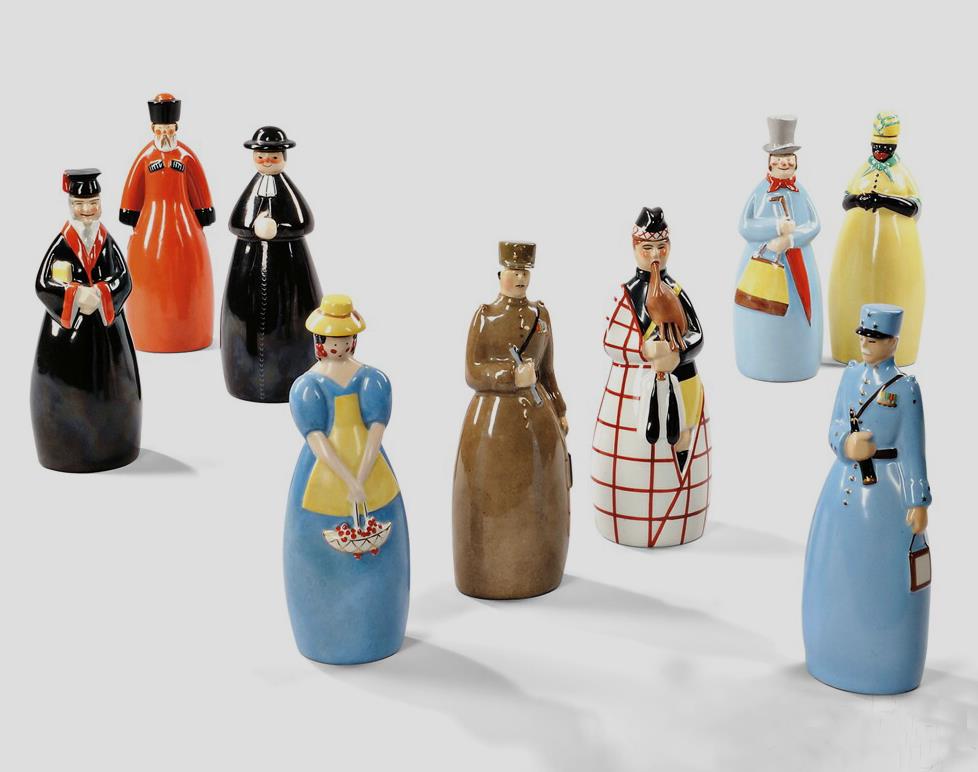
Their most successful objects sold in the retail store were porcelain figures, lamps, perfume lamps, ashtrays, bottles, bookends, and kitchen items. The production of unique liqueur-decanters in 1928 set new levels of popularity and sales. Following closely in 1929, and with equal popularity came the production of tobacco-pots. Elegance, stylishness, originality, and skillful craftsmanship were vibrantly represented in each object. The spirit of liveliness and inventiveness, and the combination of themes and subject-matters must also be recognized for the amazing success of Robj.
Readers interested in viewing the full range of Robj Paris art deco ceramics will find information at https://www.robj.ch. This web page was created by Swiss designer Christian Cueni to display what may be considered the largest collection in the world of Robj trinkets or “bibelots”. The Two Red Roses Foundation’s limited collection of Robj objects and other vintage Robj inspired French and German Art Deco figures, lamps, perfume lamps and bonboniers will be prominently shown in custom made glass display cases in the MAACM café, restaurant and bars.
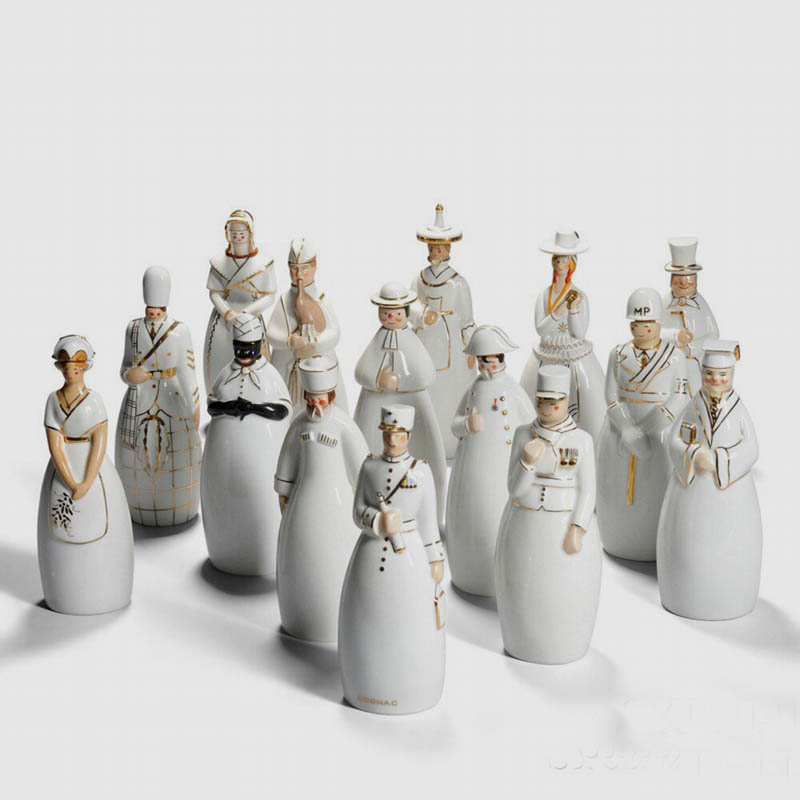
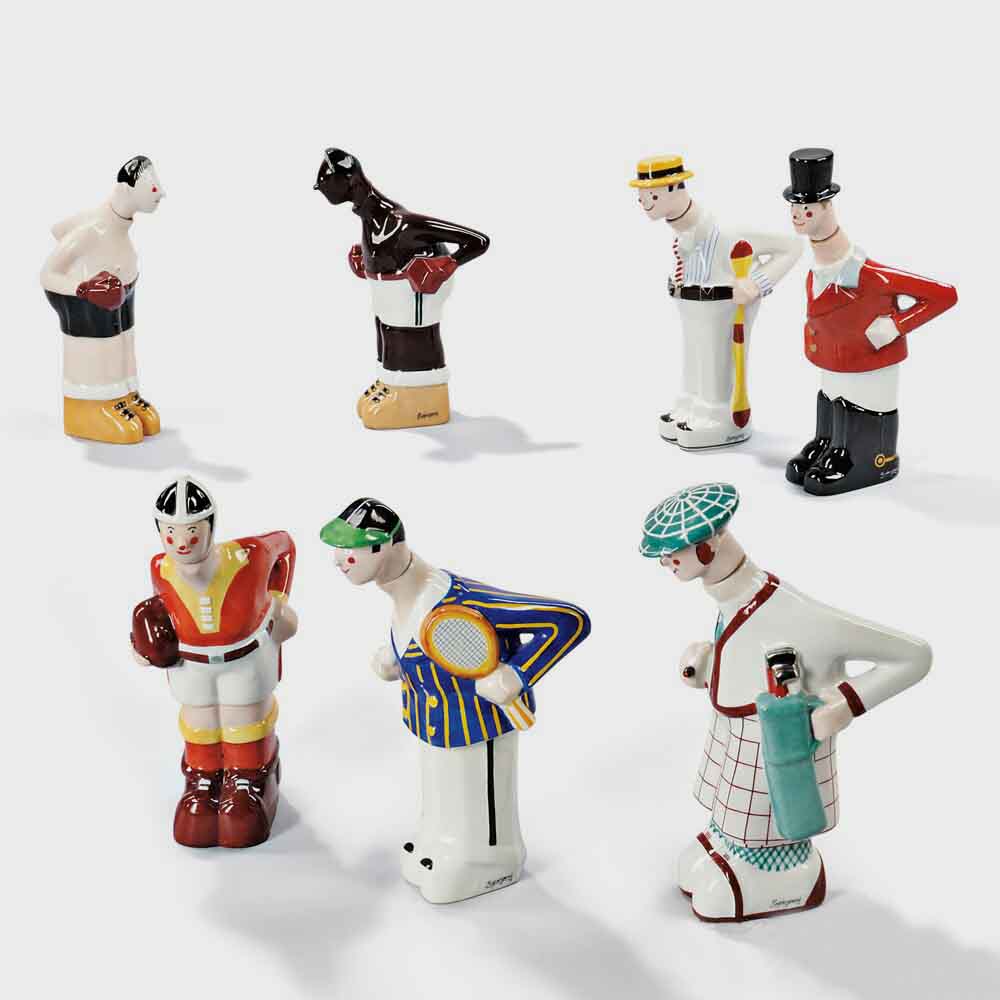
The overwhelming success and popularity of the Robj production prompted others to imitate the Art Deco imagery of these whimsical objects and today many Robj inspired porcelain figures and other trinkets can be found by various French potteries. Georges Bastard, who opened a store in 1912 at 16 rue Sainte-Cecil in Paris, commissioned E. Margerie, who had designed many of the Robj objects, to produce a line of whimsical anthromorphic liquor decanters. TRRF is delighted to own this rare set of sport figures.