Dignity & Grace - Coming Soon
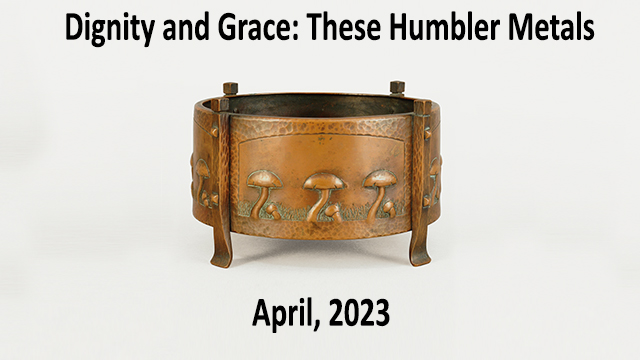
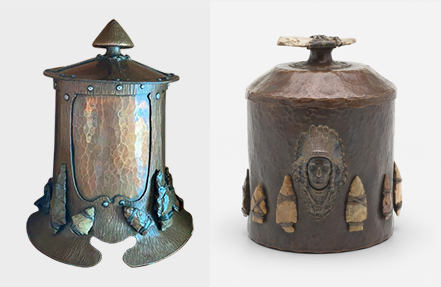
The Museum of the American Arts and Crafts Movement is proud to present an outstanding collection of important and original metalworks from the Two Red Roses Foundation. The collection is recognized as one of the most extensive and complete in the world. Inspiring the comprehensive catalog These Humbler Metals, American Arts & Crafts Metalwork from the Two Red Roses Foundation which traces the roots and history of Arts and Crafts metalwork. Meticulously curated by Rudy Ciccarello, Dignity and Grace, features more than 300 works of art created by the most renowned and gifted artisans and enterprises from the period. Stunning examples from artists including Frank Lloyd Wright, Greene and Greene, Tiffany Studios, Marie Zimmermann, Elizabeth Copeland, Gustav Stickley, Robert Jarvie, The Roycroft Shops, Karl Kipp, Jessie Preston, and Dirk van Erp are featured.
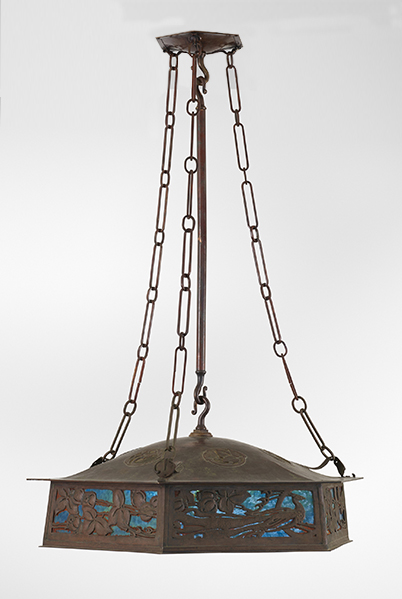
Ernest Allen Batchelder, American, 1875-1957, designer
Douglas Donaldson, American, 1882-1972, manufacturer
Copper and stained glass
During the late 19th and early 20th century, American’s began collecting early American artifacts, valuing them for their colonial associations. Fueled by growing industrialization and increasing immigration interest in early colonial aesthetics created an appetite for brass and copper objects, reminiscent of a simpler, pre-industrialized time. Metalsmiths of the American Arts and Crafts movement drew inspiration from the materials of the past, and were influenced by textured metalwork objects displayed by Japan at the 1876 Centennial Exhibition, held in Philadelphia. These artisans rejected the highly decorated, ornate, and polished decorative items of the preceding Victorian era for simple designs with clean lines, subtle coloring, and matte surfaces using copper or bronze rather than silver. The warm color pallet of copper wares complemented the oak furniture and other autumn colors of typical Arts and Crafts era interiors. Metalworking techniques such as saw piercing, etching, repousse, and hand hammering created a textured surface that reflected light and was also pleasing to the touch. Used throughout the home, metal objects like candlesticks, bookends, lamp bases, and vases reflected and refracted light, brightening interior spaces, which was often connected with health and happiness and contrasted to the dark Victorian interiors popular before the Arts and Crafts era.