
Collection Spotlight: Stanford White, A Great American Frame Designer
The frames designed by architect Stanford White (1853-1906) in the last part of the 19th century, are as bold, as brilliant, and memorable as the man himself.
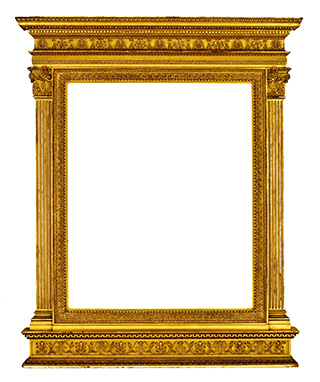
Stanford White,1853-1906, designer
Newcomb-Macklin Company, manufacturer
Gold leaf, bole, gesso, carved wood
With no formal architectural training, White studied as an apprentice at age 18 to Henry Hobson Richardson, considered by many to have been the greatest American architect of his day. In 1878, White embarked on a year and a half tour of Europe to learn about historical styles and trends. At age 26, White co-founded the firm McKim, Mead, and White with two of his architect friends having great success building palatial homes for the wealthy, including the Astor’s, Vanderbilt’s, and many others, along with impressive buildings and monuments such as the second Madison Square Garden, and the Washington Arch in New York City.
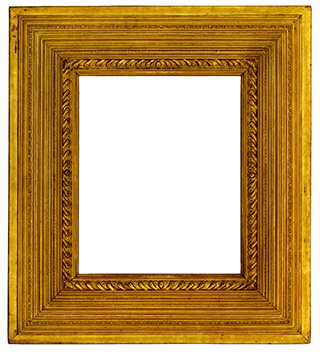
Stanford White, 1853-1906, designer
Joseph Cabus, New York, attr. frame maker
Gold leaf, bole, gesso, composition ornament on wood
His artistic eye would turn to focus on artistic frames, where he would collaborate with great American painters, including Thomas Wilmer Dewing. White’s frame designs were built by craftsmen such as frame-maker Joseph Cabus. Others were copied by woodworkers and decorators such as William Le Brocq, Newcomb-Macklin and others. White was known for the beautiful and functional grill frame as it’s pierced wire net coated with gesso gives a woven appearance, tricking the eye into seeing light emanating from inside the frame. Another trademark style was the muted, warm luminance of his Roman gilding that differed from the sheen that was seen throughout the Gilded Age.
White’s strong, architectural frames are distinctive statement pieces that are stand-alone works of art, and are among the dozens of frames featured in MAACM’s upcoming exhibition Masterworks of American Frame Design, opening soon.