Herman Dudley Murphy and the Carrig-Rohane Shop
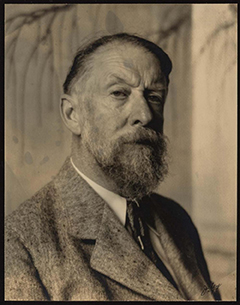
The Carrig-Rohane frame shop played a pivotal role in revitalizing American frame-making in the early 20th century. As the first American maker to sign and date his frames, Hermann Dudley Murphy helped establish frames as works of art in their own right rather than mere decoration.
Founded in 1903 in Winchester, Massachusetts, Carrig-Rohane took its name - meaning ”Red Cliff“ in Gaelic - from Murphy's family heritage. Dissatisfied with mass-produced frames, Murphy sought to restore artistry to the craft. His approach was shaped by his studies in Paris and the influence of James Abbott McNeill Whistler, who believed frames should harmonize with the paintings they enclosed.
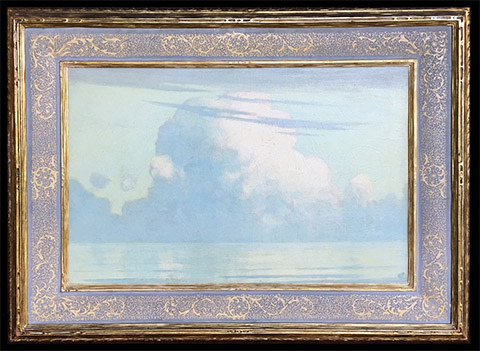
Hermann Dudley Murphy/Carrig-Rohane, Boston makers
Hand-carved verso: “1921”
Outside dimensions: 40 1/2” x 30”
Clouds and Water, date unknown
Hermann Dudley Murphy, 1867-1945
Oil on canvas

Hermann Dudley Murphy/Carrig-Rohane, Boston makers
Hand-carved signature verso: “19 M 07 / Carrig-Rohane / 470”
Outside dimensions: 47 3/4” x 39 3/4”
Murphy initially created frames for his own work, favoring simple, hand-carved and gilded designs over the overly ornate styles then popular. His distinctive aesthetic soon drew attention, and by 1906, Carrig-Rohane had expanded to include skilled artisans Charles Prendergast and Walfred Thulin. Together, they established the shop as a leading force in the Boston art scene.
In 1911, the firm incorporated as the Thulin-Murphy Co., with frames signed under both names to reflect their shared commitment to quality. By 1914, the company returned to the Carrig-Rohane name. Recognizing that managing the shop diverted him from painting, Murphy transferred operations to Boston art dealer Robert C. Vose in 1917.
Under Vose's direction, Carrig-Rohane continued producing finely crafted frames that elevated and complemented American paintings. Even after closing in 1939, the workshop's legacy endured, reshaping perceptions of frame-making as a true art form.