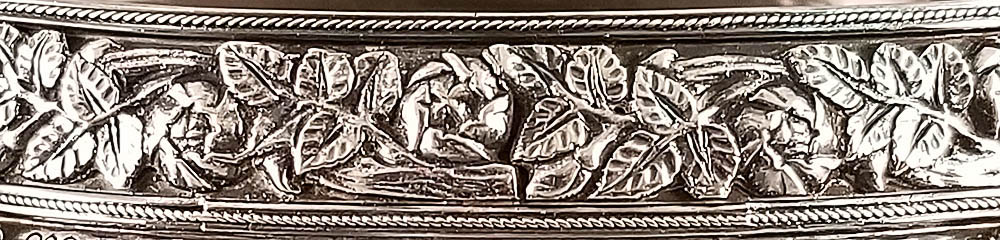
Jewelry
Substitute the luxury of taste for the luxury of costliness.
Jewelry design underwent considerable change around the turn of the twentieth century. In reaction against Victorian-era clothing, fashions for women became less rigid and restricting, and simpler jewelry designs were created to complement these styles. Jewelers looked to nature as inspiration for new designs. An art jewelry movement emerged, known as Arts and Crafts in Britain and America, Art Nouveau in France and Belgium, and Jugendstil and Secession in Austria and Germany.
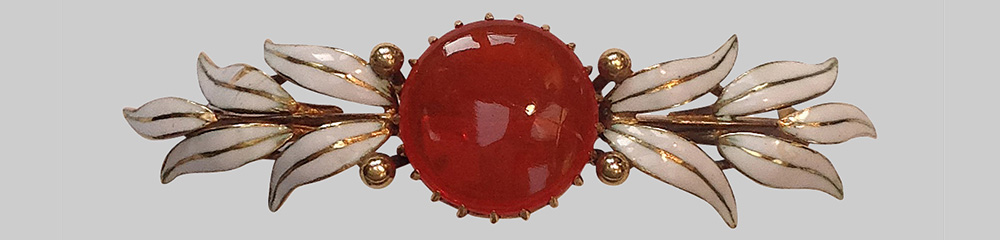
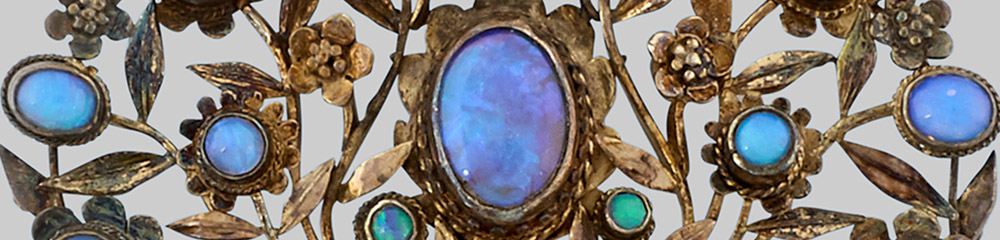
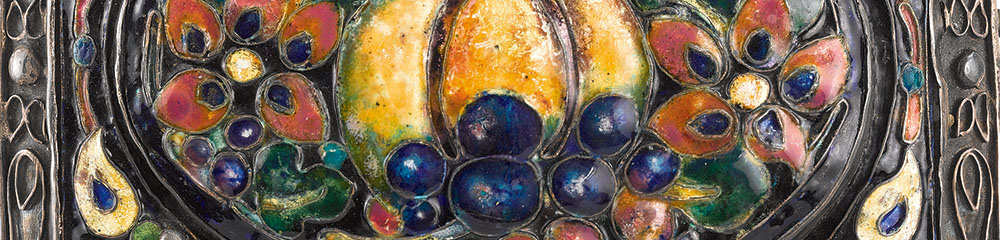
The rare and unique pieces in the Two Red Roses Foundation’s jewelry collection exemplify the spirit of reform present in the movement. No matter where it developed, art jewelry shared a strong reaction against ornate Victorian and Edwardian styles that prioritized expensive gemstones and metals, favoring instead simpler and more artistic designs inspired by nature. Jewelers selected materials for their natural beauty instead of value – silver and copper were preferred over gold and platinum, adorned with semi-precious or non-precious materials such as moonstone, amethyst, turquoise, paste stones, baroque pearls, enamel, and horn. Master jewelers also created art jewelry designs in gold and gemstones for wealthier clientele.
In response to poor workmanship and mass production, artisans took pride in creating pieces that revealed of the hand of the maker. The shared interest in craftsmanship and beauty aligned these jewelers closely with the spirit of the larger Arts and Crafts movement. The reformist mindset of the movement also made it possible for women to become jewelers for the first time. The TRRF’s jewelry collection includes work by notable American, British, and European women and men such as Arthur and Georgina Gaskin, Mrs. Charlotte Newman, John Pontus Petterson, Elizabeth Copeland, Archibald Knox, the Kalo Shop, and Tiffany & Co. Through jewelry (like necklaces, brooches, and buckles) and functional metalwork (boxes, bowls, and dining utensils), the collection offers insight into how people of the era constructed their identities with the objects they chose for personal adornment.
The objects shown below represent a small sample of the Two Red Roses Foundation jewelry collection. Please note that the Jewelry Collection is not currently on display. Click or tap for a larger view.
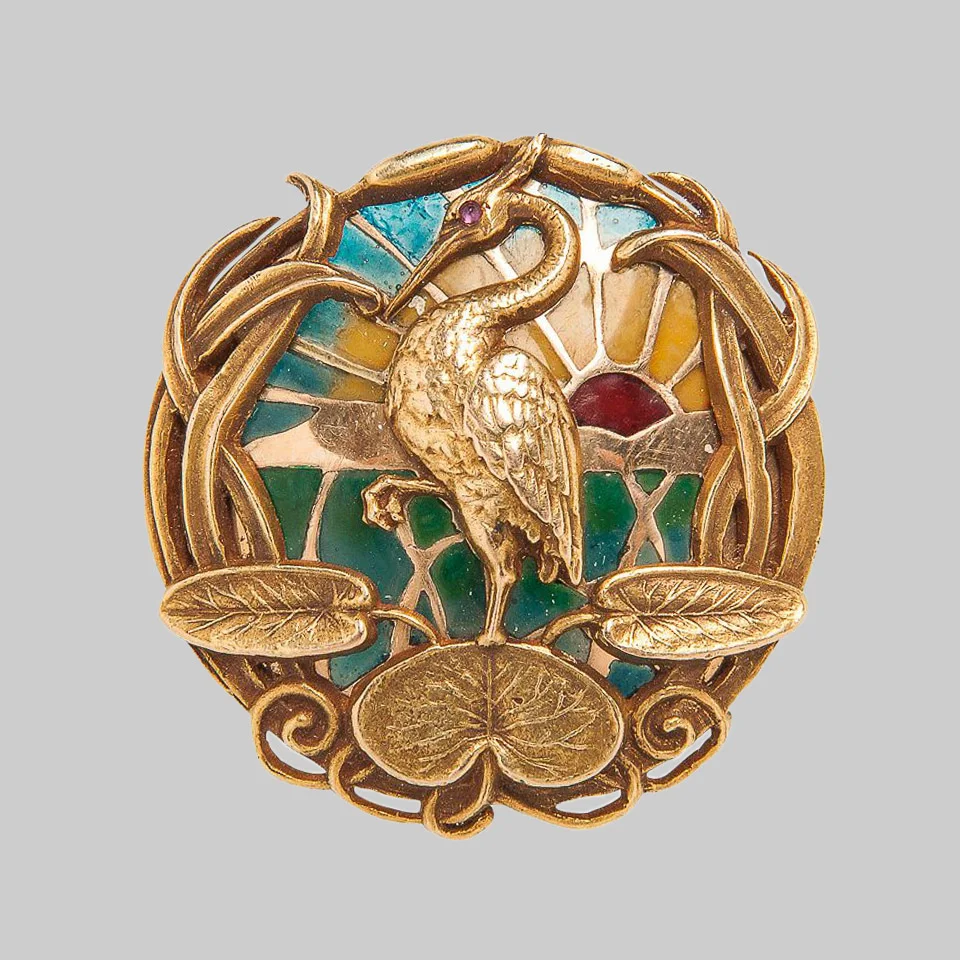
Diamond Watch Pin, early twentieth century
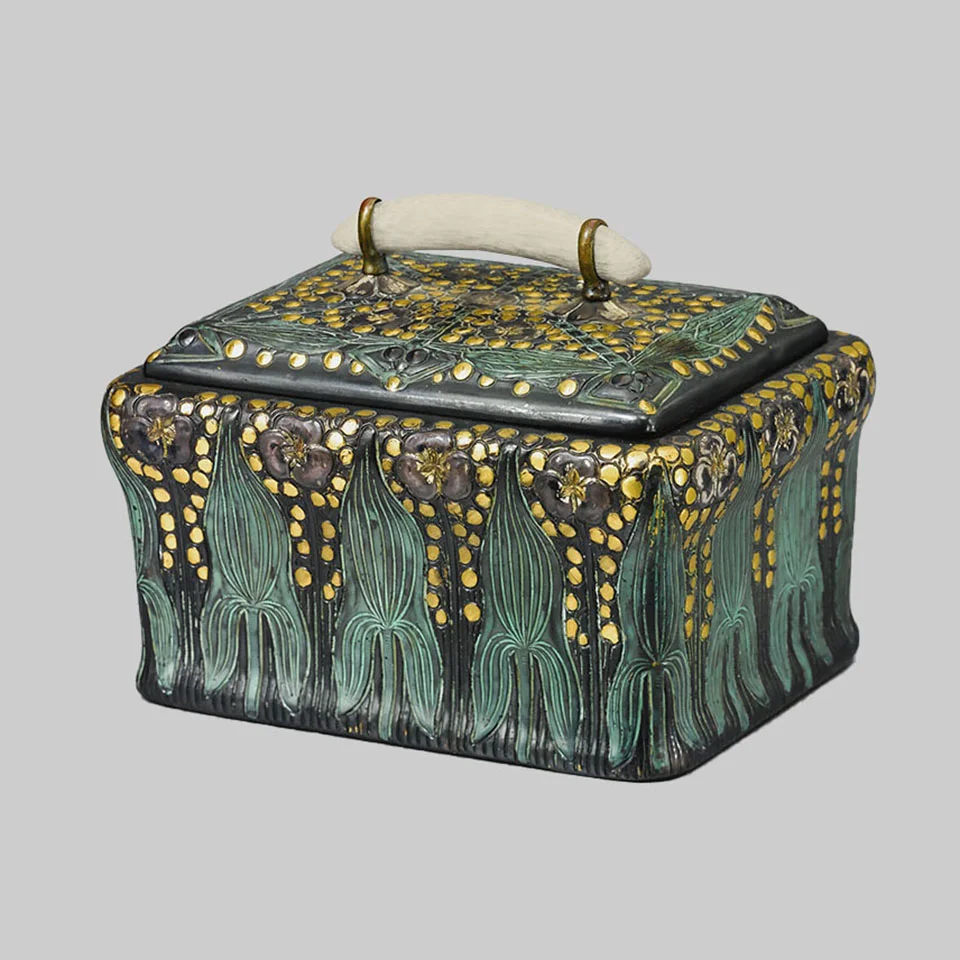
Humidor with Dragonfly and Arrowhead Designs, c. 1905
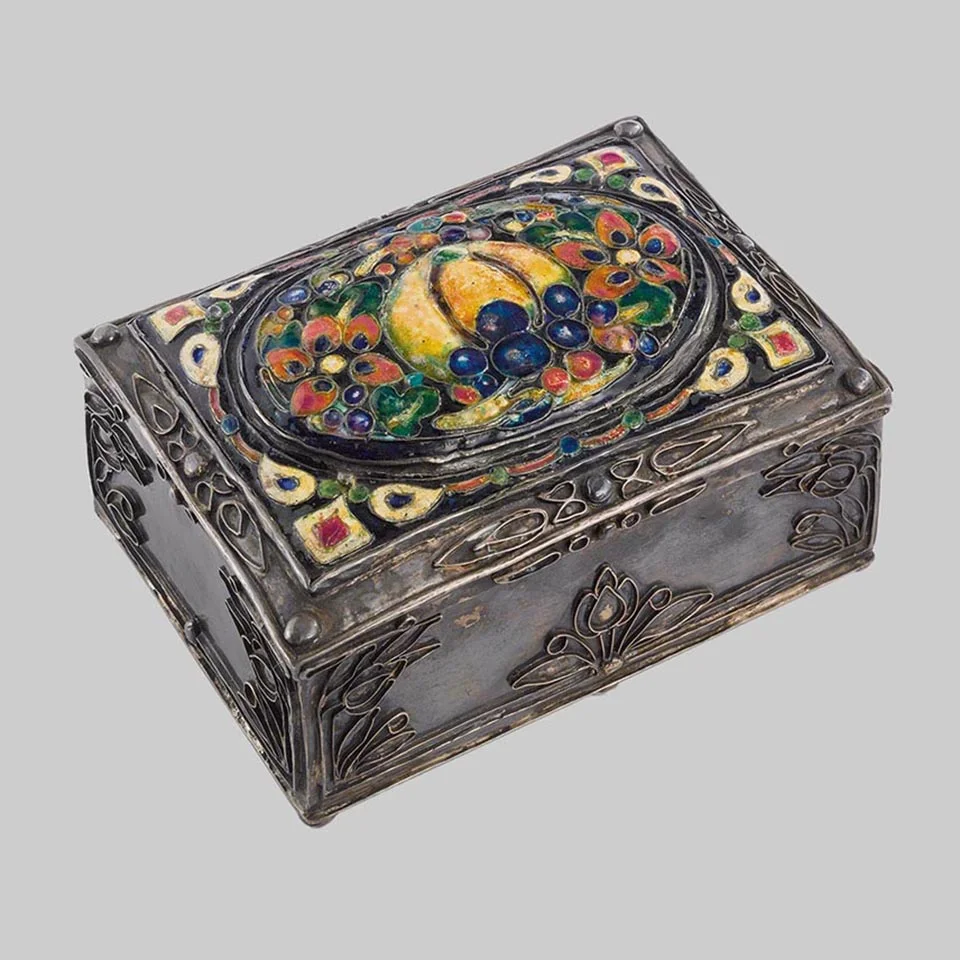
Silver Box with Foliate Decoration and Enameled Lid, c. 1910-1937
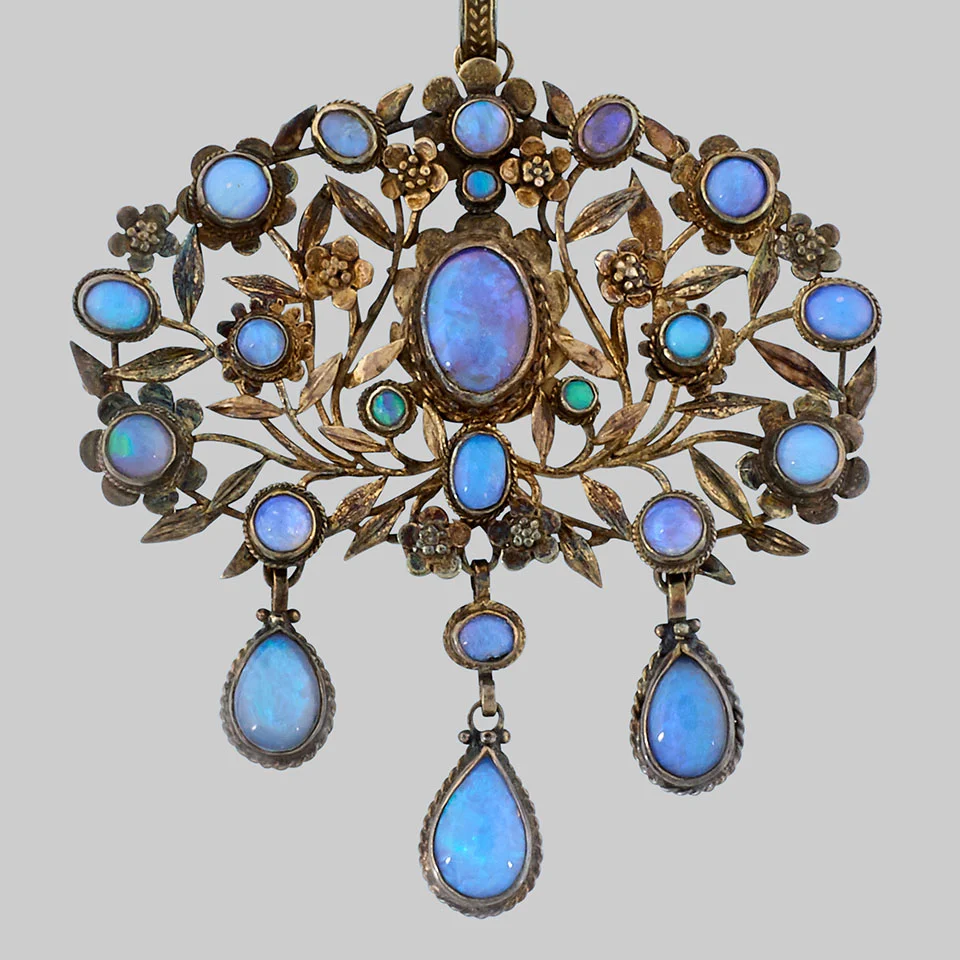
Bird of Paradise pendant, c. 1910
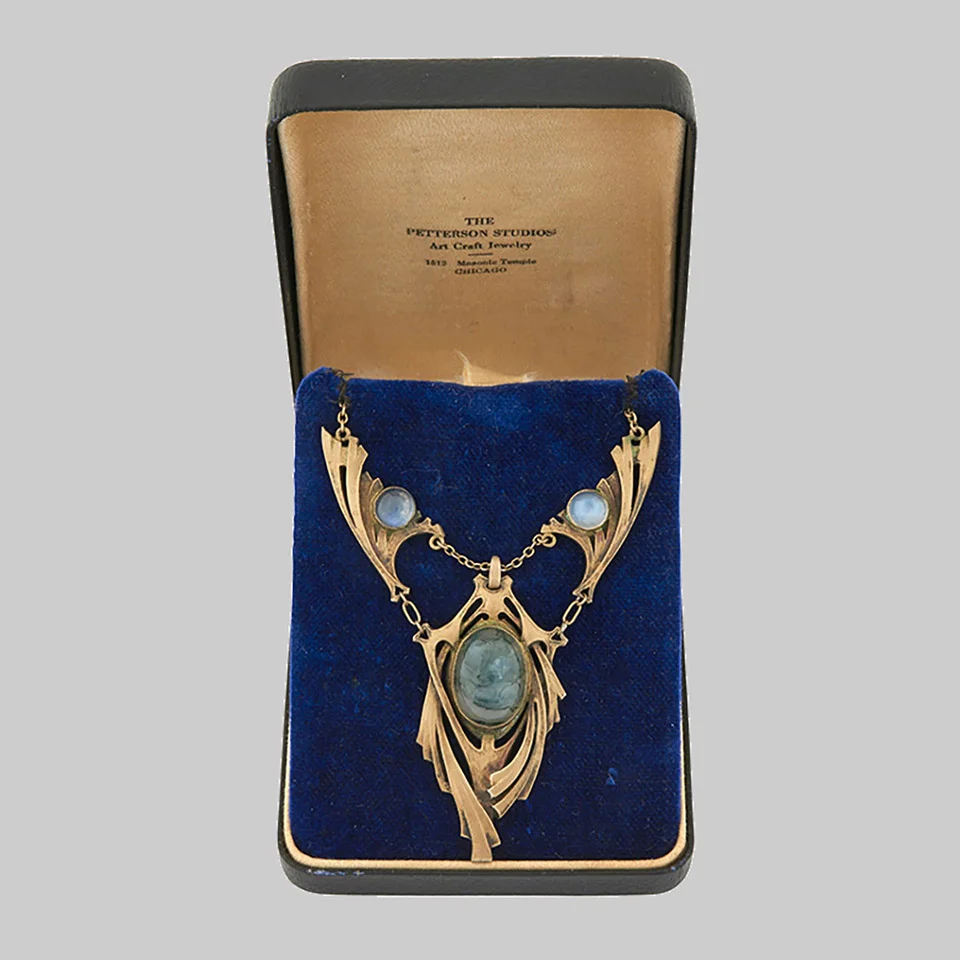
Necklace in Original Box, c. 1915-1919
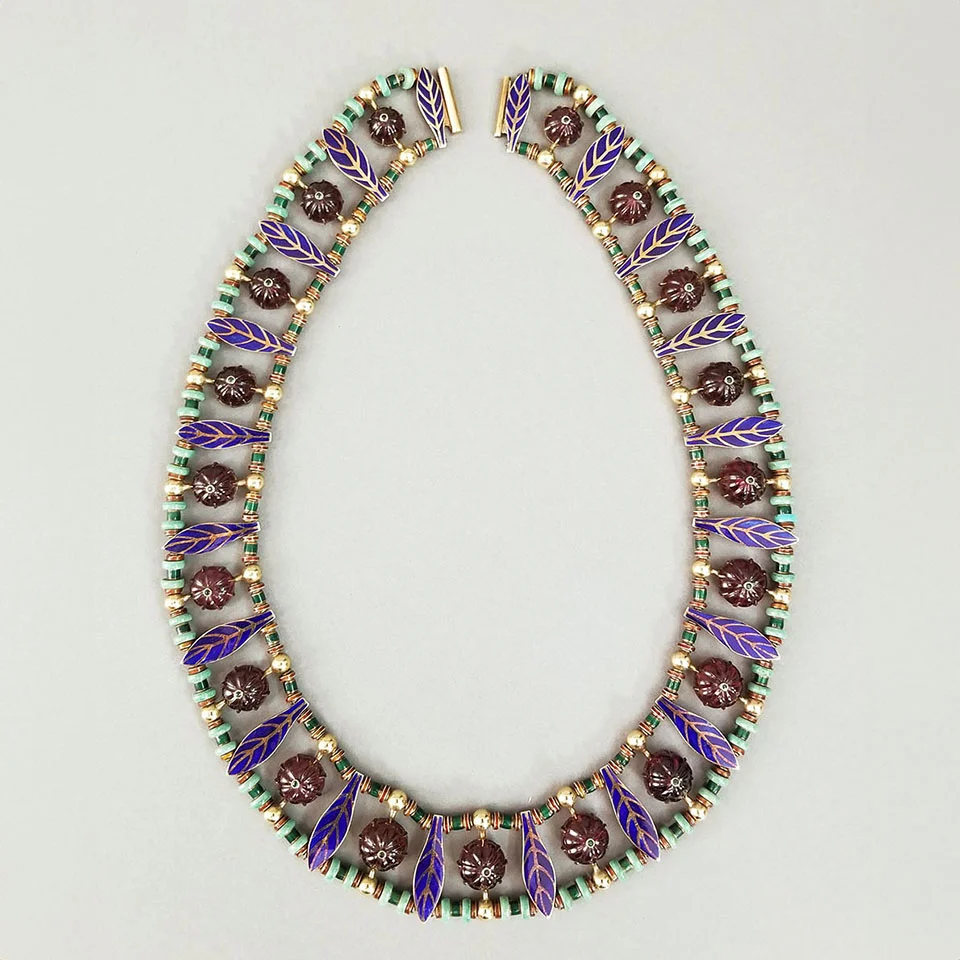
Egyptian Style Necklace, c. 1937
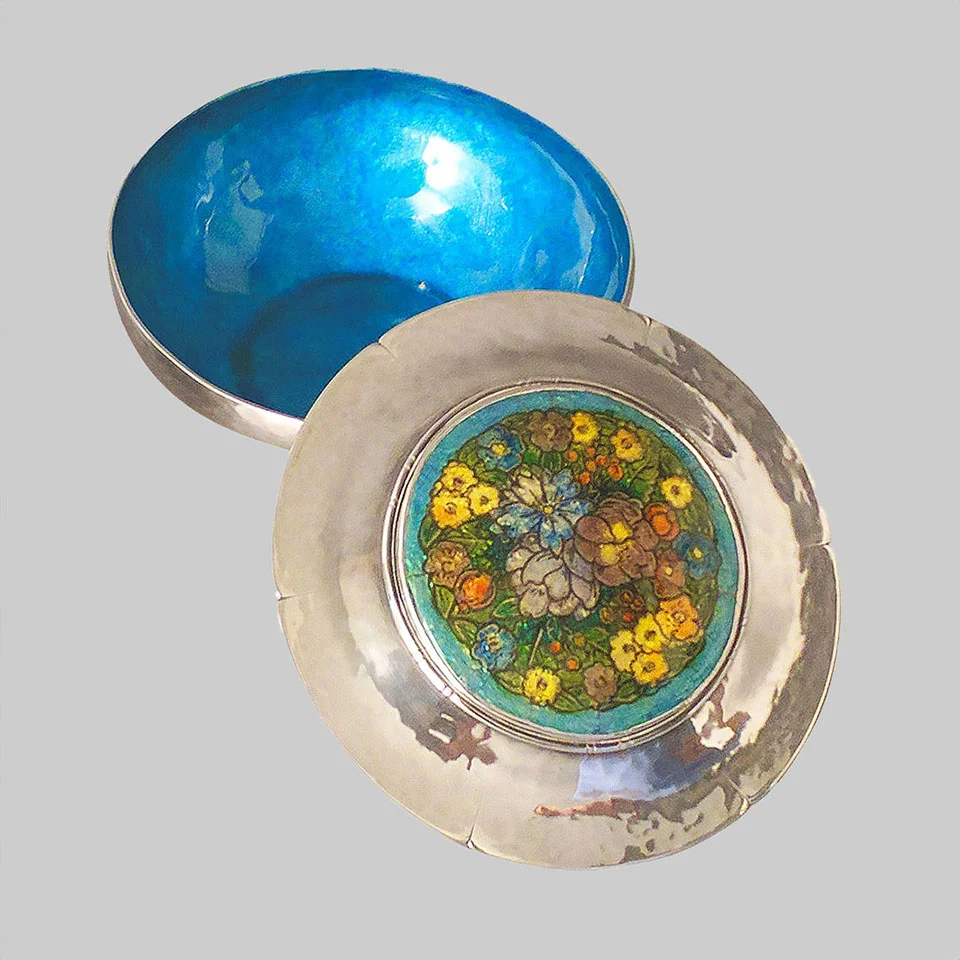
Bowl, c. 1925-1929
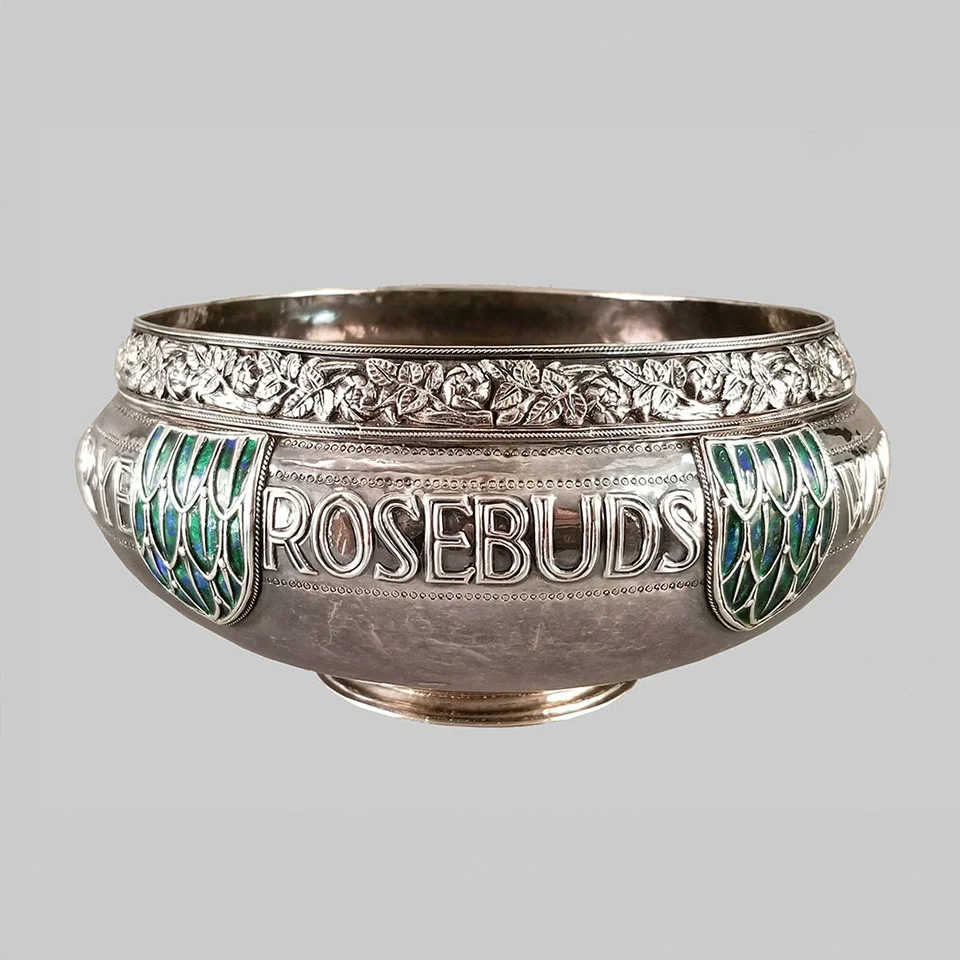
Bowl, 1912
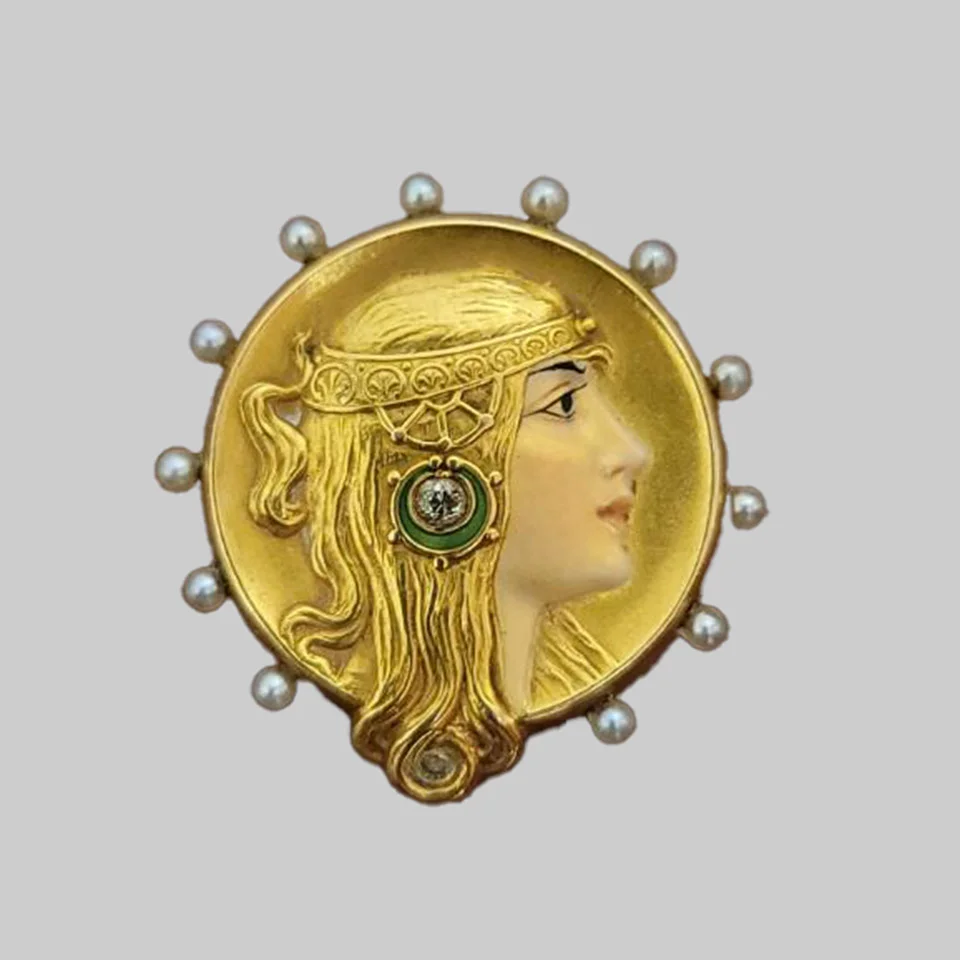
Brooch, early 20th century
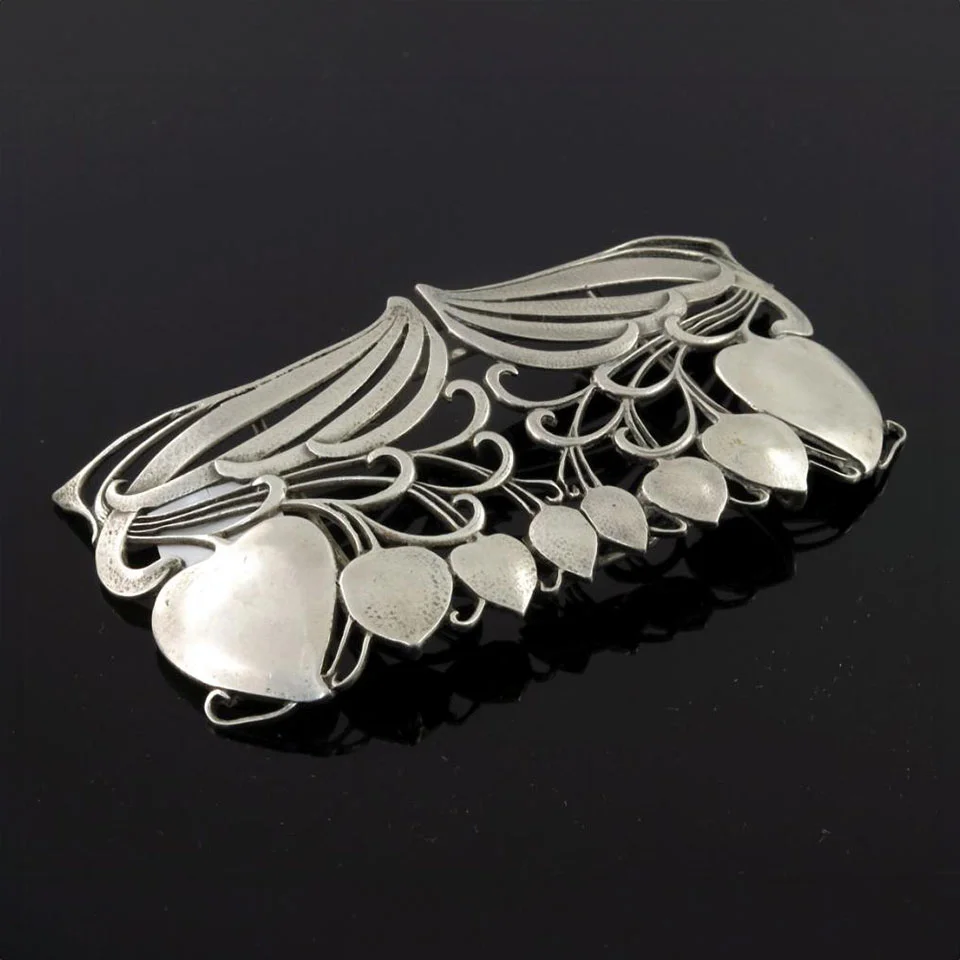
Silver buckle, 1901
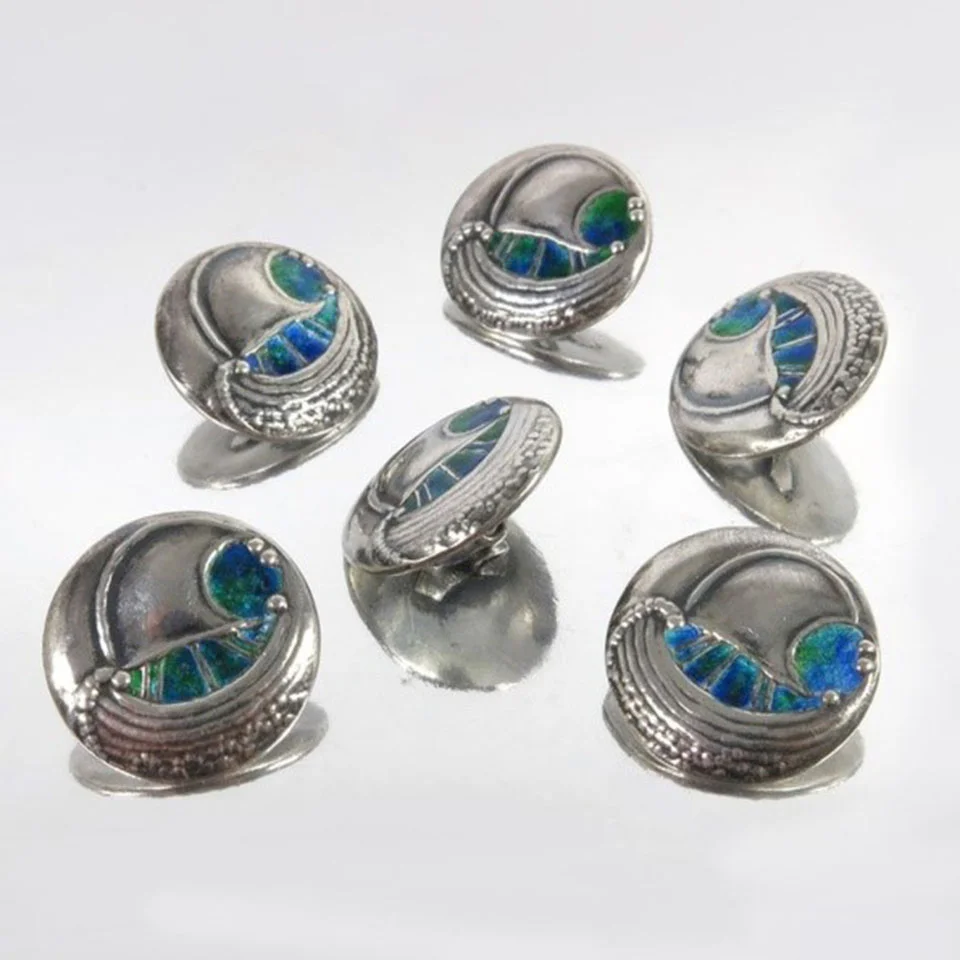
Buttons with gallions, 1907
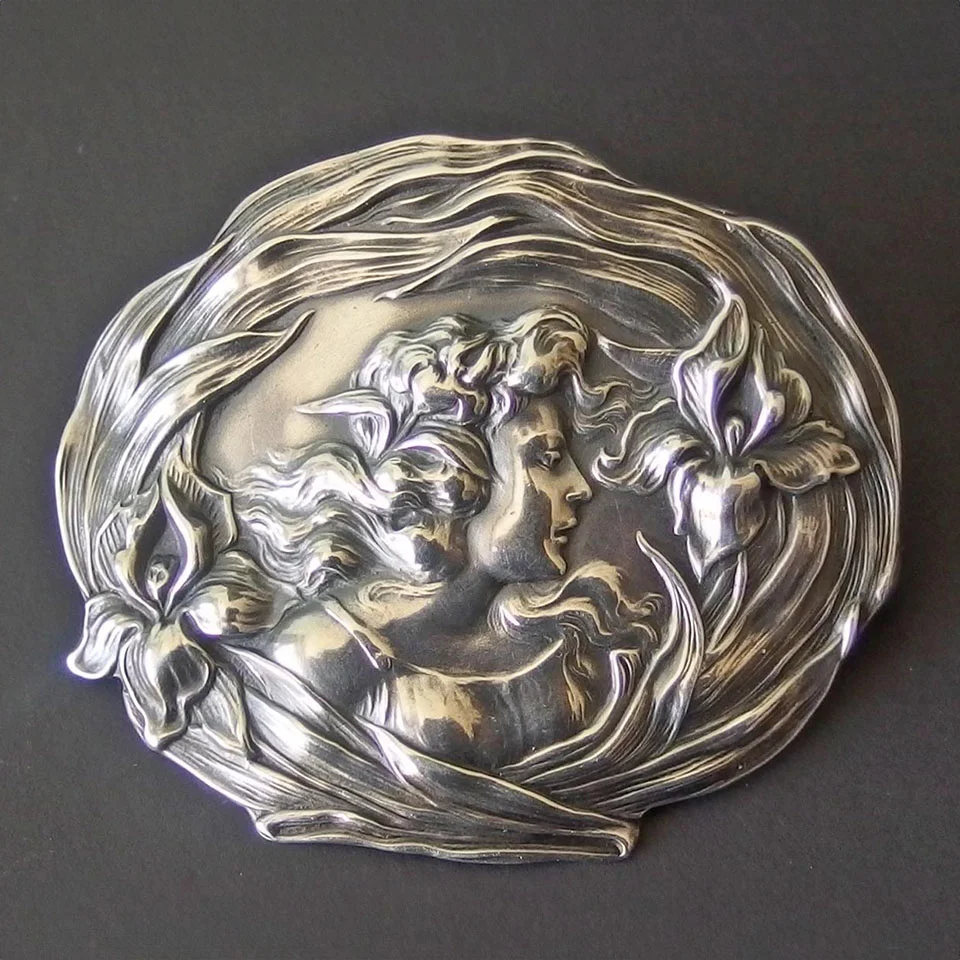
Brooch, c. 1900