Collection Spotlight: The Blueberry Pickers by Frank Desch
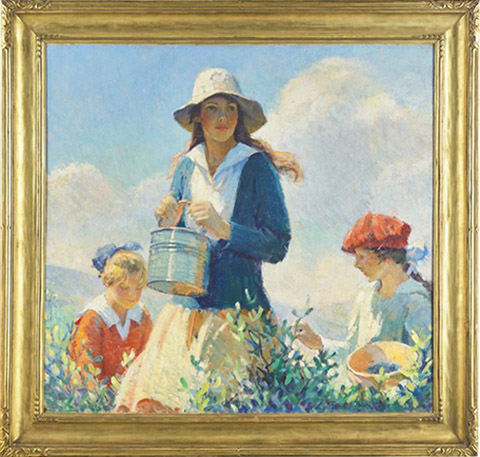
Frank H. Desch, American, 1873-1934
Oil on canvas
As the summer swelter presses on, bringing record heat, bright afternoons, and the hectic pace of seasonal traffic, plan a refreshing escape to MAACM’s Collector’s Gallery. Inside, visitors can trade the glare and humidity for cool galleries filled with extraordinary portraits and landscapes by celebrated American masters. Among the many examples of early American Impressionism on view is Frank H. Desch’s The Blueberry Pickers, a charming meditation on leisure, family, and the simple pleasures of blueberry season.
Frank H. Desch (1873–1934) was born in Philadelphia and trained under renowned American painter William Merritt Chase at the Pennsylvania Academy of the Fine Arts. He later continued his studies with Charles Hawthorne at the Cape Cod School of Art in Provincetown, Massachusetts, and with Louis-François Biloul in Paris. Desch became deeply involved in the thriving art colony of Provincetown and the Provincetown Art Association, where he exhibited regularly until his death. His career placed him within a lively community of artists exploring modern approaches to color, light, and outdoor painting in the early decades of the twentieth century.
Like many American artists working in the late nineteenth and early twentieth centuries, Desch was drawn to subjects that joined everyday life with the beauty of the natural world. He became particularly known for depictions of women and children in sunlit outdoor settings. Working with a luminous palette, loose brushwork, and the direct observation encouraged by plein air painting, he created scenes that feel both immediate and gently idealized. Rather than presenting grand historical narratives or formal portraits, Desch often focused on quieter experiences: figures at rest, time spent outdoors, and the fleeting effects of sunlight across a landscape.
The Blueberry Pickers offers an especially appealing example of this approach. Its subject, women and children gathering blueberries, transforms an ordinary seasonal activity into a scene of warmth and quiet beauty. The act of berry picking suggests both work and leisure, yet Desch’s treatment emphasizes the pleasure of being outdoors and the intimacy of a shared summer experience. His loose handling of paint and attention to natural light place the work firmly within the language of American Impressionism, in which atmosphere, color, and sensation often mattered as much as precise description.
The painting also reflects a broader interest among American artists of the period in finding beauty close to home. Rural landscapes, gardens, shorelines, and other familiar settings offered artists opportunities to observe changing light while celebrating subjects recognizable to contemporary viewers. In Desch’s hands, blueberry picking becomes both distinctly seasonal and quietly universal. There is something wonderfully timeless about the painting. Blueberry season still marks the height of summer in much of the Northeast, when long days invite people outdoors despite the heat. Desch captures that familiar rhythm without overstatement, preserving a small moment that might otherwise have passed unnoticed. More than a century later, The Blueberry Pickers reminds us that art can elevate the everyday and make even the most ordinary summer ritual worth lingering over.
See The Blueberry Pickers and other extraordinary works of American Impressionism in MAACM’s Collector’s Gallery, where a cooler kind of summer afternoon awaits.