Rookwood Vellum: Painting in Clay and Glaze
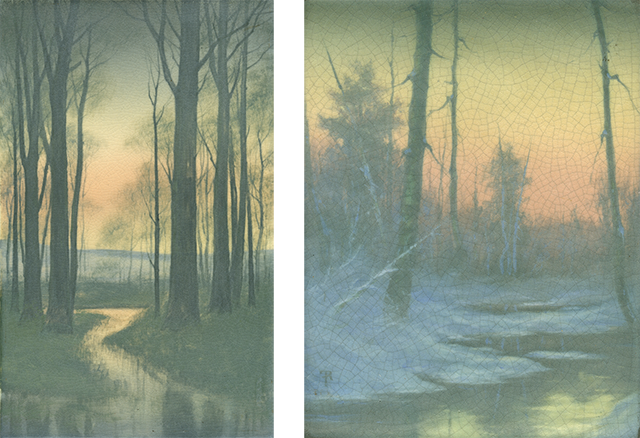
Right: Winter Landscape, 1912; Frederick Rothenbusch, American, 1876-1937, decorator; Earthenware with Vellum glaze
Founded in Cincinnati in 1880, Rookwood Pottery became internationally celebrated for its technical innovations and artistic excellence. Its ceramic plaques represent a particularly accomplished union of pottery and painting, allowing artists to create atmospheric landscapes on fired clay rather than canvas. Importantly, these individually painted works also offered a more affordable alternative to traditional oil paintings, making original works of fine art accessible to a broader public. This democratization of artistic ownership reflected the Arts and Crafts movement's conviction that beauty and craftsmanship should enrich everyday life.
The development of these plaques involved significant changes in both ceramic bodies and glaze technology.
During the 1880s and 1890s, Rookwood employed various earthenware bodies, including naturally colored clays and lighter, refined white bodies. Earthenware, fired at relatively moderate temperatures, provided a suitable surface for painted decoration but was susceptible to crazing—the fine network of cracks that can develop when the glaze and ceramic body expand or contract differently.
Around the turn of the twentieth century, Rookwood increasingly favored refined white bodies and soft porcelain compositions. These lighter-colored materials offered a more neutral background for delicate painting and, when properly matched with their glazes, could reduce crazing. The transition was gradual, however, and different ceramic bodies continued to be used concurrently.
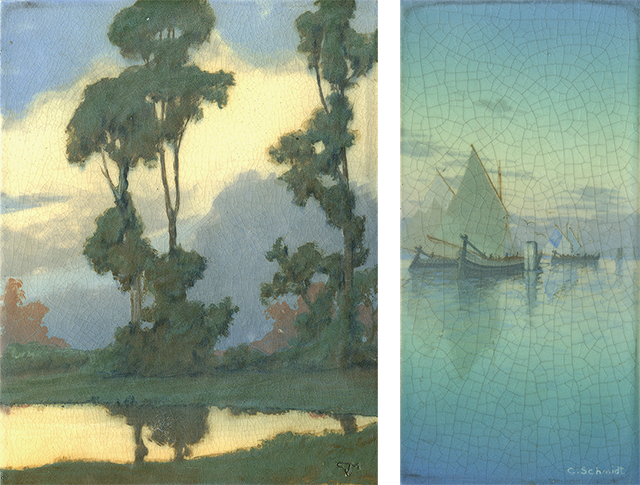
Right: Untitled (Seascape), 1922;Carl Schmidt, American (born Germany), 1875-1959, decorator; White body with Vellum glaze
These atmospheric effects closely reflected the aesthetic principles of Tonalism, an influential American artistic movement that emphasized subdued color harmonies, soft transitions of light, and evocative, often dreamlike landscapes. Like Tonalist painters working in oils, Rookwood's decorators sought to communicate mood and emotional resonance rather than precise descriptive detail. Vellum glaze was particularly well suited to this artistic approach, transforming painted ceramic surfaces into quiet, contemplative landscapes characterized by mist, fading light, and subtle tonal variations.
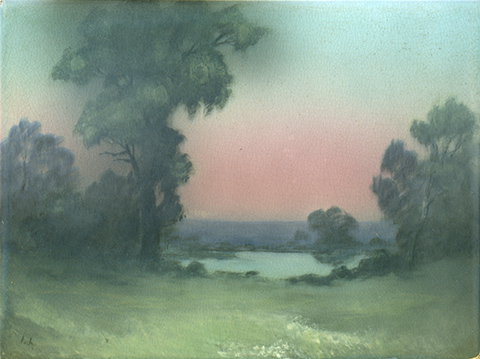
Lenore Asbury, American, 1866-1933, decorator
Rookwood Pottery Company, Cincinnati, OH, manufacturer
White body with Vellum glaze
Together with the Museum's existing examples, including two plaques produced by Newcomb Pottery, these works offer visitors an opportunity to appreciate the technical experimentation, Tonalist influences, and painterly accomplishments that distinguished American art pottery during the Arts and Crafts movement. They also illustrate how the transformation of painted clay into original works of fine art helped bring artistic expression within reach of a wider audience.