Lillian Palmer - The Art of Painted Light
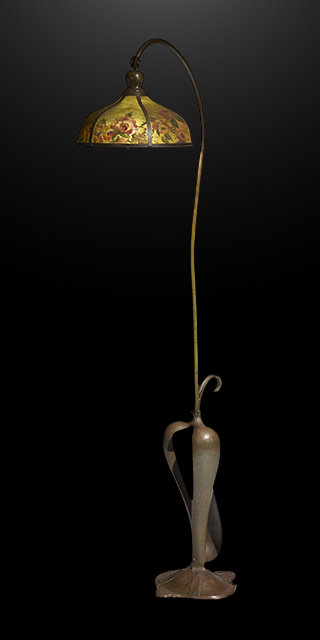
Lillian Palmer, 1871-1964
Patinated brass and hand-wrought copper, painted brass mesh
60 ½ h x 12 w x 24 d
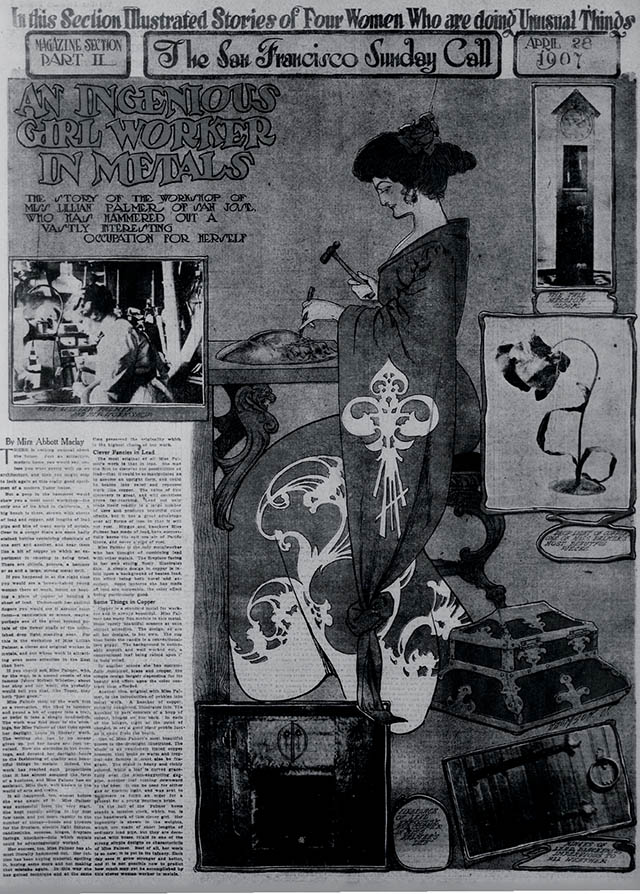
Working initially in her basement workshop in San Jose, Palmer developed a reputation for handwrought metalwork and inventively decorated lamps. By 1907, newspapers were praising her originality. A hallmark of her lighting was painted metallic mesh, which softened the harsh glare of electric bulbs while giving floral motifs a luminous quality.
David Cathers notes that the pendants’ van Erp–like shade construction raises the possibility that they were made after the house was completed, perhaps in the mid-1910s. Reporting the view of Isak Lindenauer, a pioneering San Francisco Arts and Crafts dealer and researcher, Cathers writes: “Lindenauer believes the mesh panels may have been painted by August Tiesselinck.” Tiesselinck joined Palmer’s workshop in 1914, specializing in lighting fixtures and shades with floral decoration. If this attribution is correct, the panels could have been painted around 1914 or later, rather than at the time of the house’s original construction. Since no extant Palmer fixtures are signed and no catalogues of her work are known, the suggested dating rests on provenance, construction, and decorative technique rather than definitive documentation.
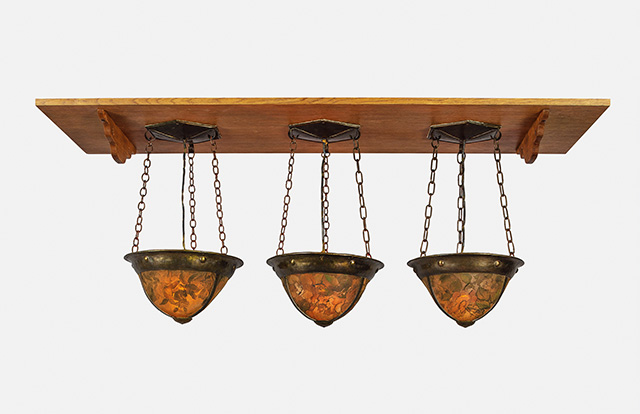
Lillian Palmer, American, 1871-1961, designer
Copper, paint, metal
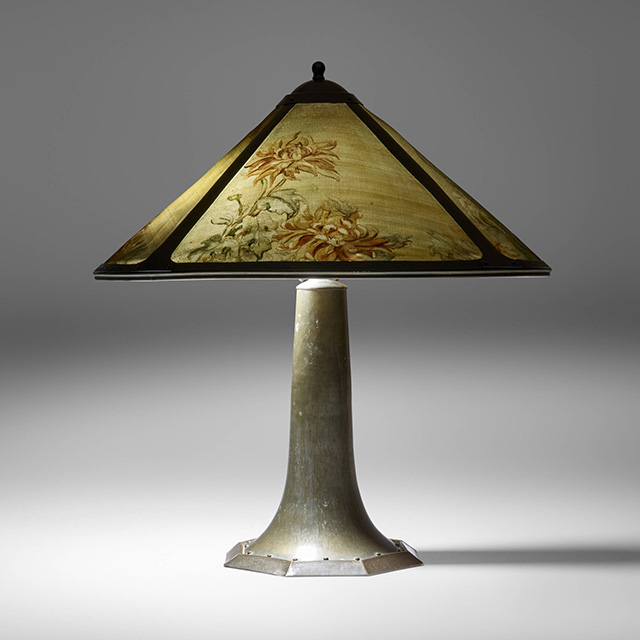
Lillian Palmer, American, 1871-1961, designer
Patinated brass, hand-painted mesh screen
Together, these works show how Palmer transformed functional electric fixtures into luminous objects of artistic distinction.
Visitors are invited to explore the artistry of Lillian Palmer on the Museum’s third floor, where examples of her distinctive lighting designs are displayed in the Dignity and Grace: These Humbler Metals exhibition.
A comprehensive essay on Lillian Palmer by David Cathers appears in Beautiful, Useful, Inevtable: Arts and Crafts Lighting from the Collection of the Two Red Roses Foundation (2017).